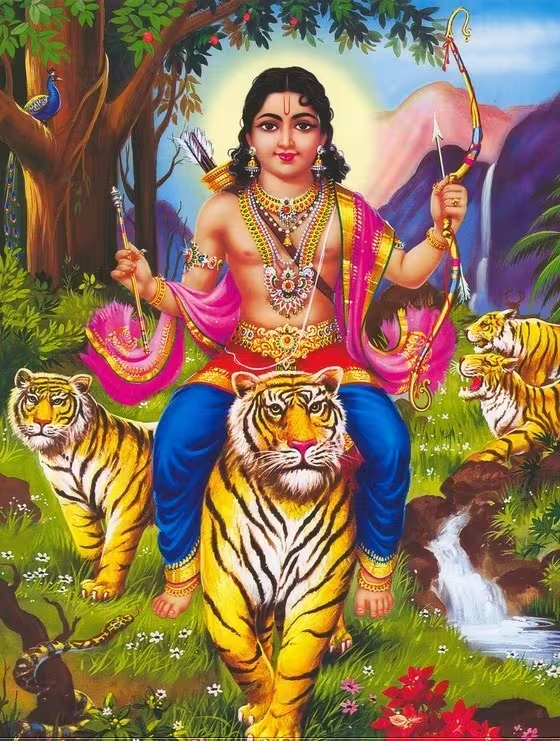
Ayyappan - Hindu Deity of Truth and Righteousness
In the dense, mist-laden forests of the Western Ghats in Kerala, a powerful chant echoes through the hills, especially during the winter months: "Swamiye Saranam Ayyappa!" (Oh Lord Ayyappa, I seek refuge in you!). It is the call of millions of pilgrims, their hearts set on a single destination—the sacred hill shrine of Sabarimala. Here resides Lord Ayyappan, a deity whose story is a profound tapestry of divine intervention, human virtue, and the timeless quest for spiritual truth. As Hariharaputra, the son of both Shiva (Hara) and Vishnu (Hari), Ayyappan embodies a powerful synthesis of Shaivite and Vaishnavite traditions, representing a unifying force in the Hindu pantheon. He is the eternal celibate (Naishtika Brahmachari), the guardian of dharma, and the deity who presides over one of the largest and most demanding annual pilgrimages in the world.
Early Life & Background: The Legend of Manikandan
The story of Ayyappan's birth is rooted in Puranic lore, a divine drama enacted to restore cosmic balance. It begins with the powerful she-demon, Mahishi, who, burning with vengeance for the death of her brother Mahishasura, undertook severe penance to Brahma. She secured a boon that made her nearly invincible: she could only be slain by a child born of the union of Lord Shiva and Lord Vishnu.
To create such a being, the gods turned to a pivotal moment in Hindu mythology: the Samudra Manthan, or the Churning of the Ocean of Milk. When the pot of divine nectar (Amrita) emerged, Lord Vishnu took the form of Mohini, an enchantress of celestial beauty, to trick the asuras and distribute the nectar to the devas. Lord Shiva, witnessing Mohini's divine form, was captivated. From their divine union, a child was born—Hariharaputra, the embodiment of both their powers.
This divine child was destined for an earthly purpose. He was left on the banks of the River Pamba, where he was discovered by King Rajashekhara, the benevolent but childless ruler of the Pandalam dynasty. The king, on a hunting expedition, found the radiant infant with a golden bell (mani) tied around his neck (kandan). Overjoyed, he named the child Manikandan and raised him as his own heir.
Manikandan grew up to be an extraordinary prince. He was a master of the scriptures, an unparalleled warrior, and possessed divine wisdom that astounded his teachers and the court. He was beloved by the king and the people, but his status as crown prince stirred jealousy in the heart of the king's minister. The minister poisoned the mind of the queen, who had since given birth to her own son, convincing her that Manikandan was a threat to her child's future.
Feigning a severe illness, the queen, at the minister's behest, declared that she could only be cured by the milk of a lactating tigress (pulipal). The court knew this was a death sentence, but the noble Manikandan, devoted to his mother, volunteered for the impossible task. Despite the king's desperate pleas, he set off for the dense, dangerous forest.
In the wilderness, Manikandan fulfilled his divine destiny. He confronted and defeated the tyrannical demoness Mahishi, liberating the heavens and earth from her reign of terror. The gods, overjoyed, paid homage to him. In a triumphant, awe-inspiring display of his divine nature, Manikandan returned to the Pandalam palace riding a formidable tigress, with a whole retinue of tigresses following him. The entire kingdom, including the repentant queen and king, stared in disbelief. King Rajashekhara finally understood that his beloved son was no mere mortal.
Realizing his earthly mission was complete, Manikandan prepared to leave the mortal realm. The heartbroken king begged him to stay, but Manikandan instructed him to build a shrine at a location he would mark with an arrow. The arrow landed on a hilltop known as Sabarimala, named after the devotee Sabari from the Ramayana. There, Manikandan merged into the idol that was installed, becoming the deity Ayyappan, forever in a state of yogic meditation, blessing all who seek him with a pure heart.
The Philosophy and Contributions of Ayyappan Worship
Ayyappan’s most significant contribution is not a text or a monument, but a living philosophy of discipline, unity, and self-realization embodied in the Sabarimala pilgrimage.
Symbol of Unity: As Hariharaputra, Ayyappan is a powerful symbol of the oneness of God, transcending the sectarian divides between followers of Shiva and Vishnu. This inclusivity extends beyond theological lines. The Ayyappan tradition is renowned for its spirit of universal brotherhood, famously symbolized by his relationship with Vavar, a Muslim warrior-saint. According to legend, Vavar was a fierce pirate who was defeated and subsequently won over by Manikandan's wisdom and power, becoming his loyal companion. To this day, pilgrims to Sabarimala first pay their respects at the Vavarunada (Vavar's shrine) near the main temple, a testament to the communal harmony at the heart of Ayyappan worship.
The Path of Austerity (Vratam): The core of Ayyappan worship is the 41-day period of austerity known as the Vratam. It is a rigorous spiritual discipline designed to purify the mind, body, and soul in preparation for the pilgrimage. Devotees, known as Ayyappans or Swamis, adhere to a strict code:
- Brahmacharya: Complete celibacy in thought, word, and deed.
- Simple Living: Abstaining from luxuries, sleeping on a simple mat, and walking barefoot.
- Dietary Purity: A strict vegetarian diet, avoiding all intoxicants and stimulants.
- Emotional Control: Refraining from anger, gossip, and worldly attachments.
- Devotional Practice: Regular prayers, temple visits, and chanting Ayyappan's name.
This period of self-denial dissolves the ego and social distinctions. All pilgrims address each other as "Swami," recognizing the divine spark in one another, regardless of their age, wealth, or caste.
The Journey as a Metaphor: The pilgrimage itself is a metaphor for the journey of the individual soul (Jivatma) towards the ultimate reality (Paramatma). The arduous trek through the forest symbolizes the struggles of life, and the discipline of the Vratam equips the devotee to overcome them. The sacred bundle carried by the pilgrim, the Irumudi Kettu, is rich with symbolism. Its front pouch (munmudi) holds offerings for the deity, representing one's spiritual aspirations, while the back pouch (pinmudi) holds personal necessities, representing worldly burdens. By carrying the Irumudi, the pilgrim symbolically carries his life's balance of spiritual and material responsibilities on a path to surrender them to the divine.
Legacy & Influence: The Living Tradition of Sabarimala
The legacy of Ayyappan is most profoundly felt through the Sabarimala pilgrimage, which has grown from a regional tradition into one of the largest spiritual gatherings on Earth.
The Sacred Steps and the Ultimate Truth: The final approach to the sanctum sanctorum at Sabarimala is the Pathinettam Padi, a flight of 18 holy steps. Each step has a symbolic meaning, representing the senses, emotions, and qualities a devotee must transcend to attain self-realization. Only those who have observed the full Vratam and carry the Irumudi are permitted to ascend these steps. At the top, above the sanctum, is inscribed the great Vedantic truth: Tat Tvam Asi (That Thou Art). This is the ultimate teaching of the pilgrimage. The journey is not just to see a God, but to realize the God within oneself. The devotee who endures the hardships and purifies himself is reminded that he and the divine are one and the same.
Cultural and Social Impact: The Mandala Kalam (the 41-day pilgrimage season) transforms the cultural landscape of South India. The sight of men clad in simple black, blue, or saffron robes, the sound of devotional songs like Harivarasanam, and the pervasive chant of "Swamiye Saranam Ayyappa" create an atmosphere of intense devotion. This tradition has fostered a unique culture of equality and discipline, where CEOs and laborers walk side-by-side, sharing food and supporting each other as equals.
Ayyappan in the Modern Era: Today, Ayyappan is remembered as the ultimate symbol of yogic self-control and righteous living. His worship continues to grow, with devotees spread across the globe. The Sabarimala temple, however, has also become a focal point of contemporary debate, particularly concerning the long-standing tradition restricting the entry of women of menstruating age, which is based on the celibate nature of the deity. This has led to landmark court rulings and intense social discourse, placing the ancient traditions of Ayyappan worship at the intersection of faith, civil rights, and constitutional law. This ongoing dialogue ensures that the legacy of Ayyappan, the deity of truth and righteousness, remains a dynamic and powerful force in modern India.