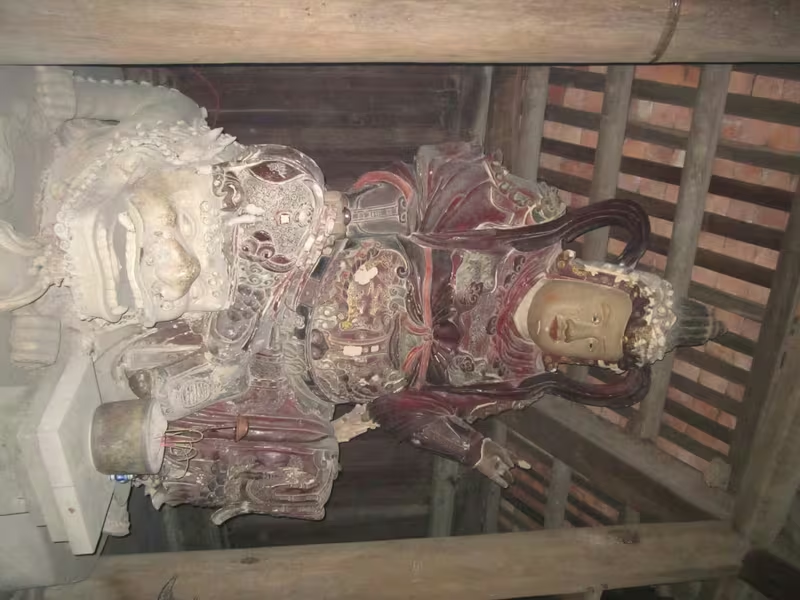
Dharmapāla: The Wrathful Guardians of Buddhist Dharma
In the vast, windswept highlands of the Himalayas, where Buddhism took root and blossomed into a unique and profound tradition, the spiritual landscape is guarded by a host of formidable beings. They are not serene, smiling figures seated on lotus thrones, but terrifying, multi-limbed deities wreathed in flames, with bared fangs, bulging eyes, and brandishing fearsome weapons. These are the Dharmapālas (Sanskrit: धर्मपाल; Tibetan: ཆོས་སྐྱོང་, Chökyong), the ‘Protectors of the Dharma’. Far from being demonic, these wrathful guardians are the very embodiment of enlightened compassion, manifesting in a fierce form to defend the teachings of the Buddha and protect its practitioners from all harm, both internal and external.
The Genesis of the Protectors: Origins and Iconography
The term Dharmapāla literally translates to ‘Dharma-Protector’. Their origins are complex, woven from the rich tapestry of Indian Mahayana and Vajrayana Buddhism, local Tibetan deities, and the Bon tradition that predated Buddhism in the region. The concept of protective deities existed in India, but it was in Tibet that the Dharmapālas rose to a position of central importance.
There are broadly two categories of origin for these powerful beings:
Emanations of Buddhas and Bodhisattvas: Many of the most revered Dharmapālas, known as jñāna-pālas (wisdom protectors), are understood to be wrathful manifestations of fully enlightened beings. For instance, Mahākāla, one of the most prominent protectors, is often considered a fierce form of Avalokiteśvara, the Bodhisattva of Compassion. Yamāntaka, the ‘Slayer of Death’, is a wrathful aspect of Mañjuśrī, the Bodhisattva of Wisdom. This dual nature is central to their identity: their terrifying appearance is not an expression of malevolence, but a manifestation of skillful means (upāya)—a powerful, compassionate energy directed at destroying the ultimate enemies: ignorance, hatred, and greed.
Subjugated Worldly Spirits: The second category consists of worldly or mundane protectors ('jig rten pa'i srung ma). According to tradition, when the great tantric master Padmasambhava (Guru Rinpoche) brought Buddhism to Tibet in the 8th century CE, he encountered powerful local gods, demons, and spirits who resisted the new faith. Instead of destroying them, Padmasambhava, with his supreme spiritual power, subjugated these entities, binding them by solemn oath to protect the Dharma and its followers forever. Many of these figures were once mountain gods, war deities, or spirits of specific places, and their integration into the Buddhist pantheon was a masterful act of cultural and religious synthesis. Begtse Chen, for example, was a pre-Buddhist Central Asian war god who was tamed and enlisted as a guardian.
The Symbolism of Wrath
The iconography of a Dharmapāla is a profound visual language, where every detail carries deep symbolic meaning. Their appearance is designed to shock the ego out of complacency and represent the raw, untamed power of enlightened mind.
- Wrathful Expression: Bared fangs, a lolling tongue, and three bulging eyes symbolize the complete overcoming of the three poisons of desire, anger, and ignorance. The third eye represents the wisdom that perceives ultimate reality directly.
- Flaming Hair and Aura: Their hair, often standing on end and ablaze, and the massive aura of wisdom-fire that surrounds them, symbolize the burning away of all obscurations and negative thoughts.
- Dark Complexion: A dark blue or black skin tone represents the immutable, unchanging nature of the ultimate truth (Dharmakāya), as vast and empty as space itself.
- Ornaments of Bone and Skulls: A crown of five skulls represents the transformation of the five negative afflictions (pride, jealousy, attachment, ignorance, anger) into the five wisdoms. Necklaces of severed heads or skulls symbolize the severing of all conceptual thought and negative karma.
- Weapons and Implements: In their multiple hands, they hold various instruments. A vajra chopper (kartika) cuts through ego-clinging. A skull cup (kapala) filled with blood represents the nectar of blissful wisdom that comes from conquering dualistic perception. A trident (trishula) pierces the three poisons.
- Stance: They often trample upon human or demonic figures, which symbolize the subjugation of the ego, attachments, and worldly obstacles that hinder spiritual progress.
The Sacred Duty: Role and Function in Buddhist Practice
The Dharmapālas are not deities to be worshipped for worldly gain in the conventional sense. They are spiritual allies, invoked in complex tantric rituals to aid the practitioner on the path to enlightenment. Their primary function is fourfold:
- To Protect the Dharma: They guard the integrity of the Buddhist teachings from being diluted, corrupted, or destroyed.
- To Protect the Sangha: They safeguard monasteries, nunneries, and the community of practitioners from harm.
- To Protect Individual Practitioners: They help individuals overcome ‘outer’ obstacles like illness, poverty, and conflict, and ‘inner’ obstacles like fear, doubt, laziness, and pride.
- To Provide Favourable Conditions: They work to create the necessary circumstances for the Dharma to flourish and for practitioners to progress without hindrance.
The Eight Great Dharmapālas
While countless protectors exist, a group known as the Eight Great Dharmapālas is particularly revered across different schools of Tibetan Buddhism. Each has a unique history and function:
Mahākāla (The Great Black One): Perhaps the most widely venerated Dharmapāla, Mahākāla is a protector of the entire Buddhist teaching. He has many forms—with two, four, or six arms, and different complexions—each associated with a specific lineage or tantric cycle. The Six-Armed Mahākāla is a special protector of the Shangpa Kagyu and Gelug schools.
Yamāntaka (The Slayer of Death): This is the wrathful form of Mañjuśrī, the embodiment of wisdom. Yamāntaka confronts Yama, the lord of death, representing the ultimate victory of wisdom over the cycle of rebirth and the illusion of mortality. His practice is central to the Gelug school.
Palden Lhamo (The Glorious Goddess): The only female among the eight, Palden Lhamo is a fierce and powerful protectress. She is considered the special guardian of the Dalai Lamas, the city of Lhasa, and the traditional government of Tibet. Riding her mule through a sea of blood, she is a swift and uncompromising force against all enemies of the Dharma.
Vaiśravaṇa (also known as Kubera): While also one of the Four Heavenly Kings, in his Dharmapāla aspect, Vaiśravaṇa is a protector associated with wealth and prosperity—not merely material wealth, but the spiritual riches of the Dharma. He is often depicted riding a snow lion.
Begtse Chen (The Great Coat of Mail): A powerful war god from Central Asia, Begtse was, according to legend, subdued by the Third Dalai Lama in the 16th century and bound to protect the Dharma. He is depicted in full armor, embodying a martial, protective energy.
Hayagrīva (The Horse-Necked One): A wrathful form of Avalokiteśvara, Hayagrīva is recognizable by the small horse head emerging from his fiery hair. He is known for his power to subdue negative forces and cure diseases, especially those caused by nagas (serpent spirits).
Kālīdevī (also known as Ekajaṭī): Another powerful female protector, Ekajaṭī is depicted with a single eye, a single tooth, and a single breast, symbolizing her non-dualistic wisdom. She is a primary guardian of the Dzogchen teachings in the Nyingma school.
Yama (The King of the Law): As a Dharmapāla, Yama is a subjugated form of the Indian god of death, now bound to serve the Dharma as a guardian of tantric vows and commitments.
Practitioners engage with these protectors through daily prayers, elaborate rituals (pujas), and meditation. In monasteries, special chapels known as gönkhangs (protector chapels) are dedicated to them. These rooms are often dark, filled with the scent of incense and butter lamps, their walls adorned with powerful, often fearsome, thangka paintings of the deities, creating an atmosphere of intense spiritual energy.
The Enduring Presence: Legacy and Cultural Impact
The influence of the Dharmapālas extends far beyond esoteric rituals; they are an integral part of the artistic, cultural, and spiritual fabric of the Himalayan world. Their dynamic and powerful forms have inspired some of the most breathtaking works of Tibetan art. From colossal statues in monasteries to intricate thangka paintings and murals, their images are ubiquitous, serving as a constant reminder of the fierce, protective compassion that underpins the Vajrayana path.
This living tradition is perhaps most vividly expressed in the annual Cham dances. In these sacred monastic festivals, monks don elaborate masks and costumes to embody the Dharmapālas and other deities. Through ritualized movement and music, they reenact the subjugation of evil and the triumph of the Dharma, purifying the environment and bestowing blessings upon the community. The Cham dance is not a performance but a profound meditation in motion, a direct invocation of the protector's enlightened energy.
From antiquity to the present day, the Dharmapālas have remained a potent and active force in the lives of Buddhist practitioners. They are not historical relics but living presences, spiritual guardians whose oaths remain unbroken. In an age of new and complex challenges, they are called upon to clear the inner and outer obstacles that stand in the way of peace, wisdom, and liberation. Their wrathful compassion continues to blaze, a timeless and powerful promise to protect all those who sincerely walk the path of the Buddha.