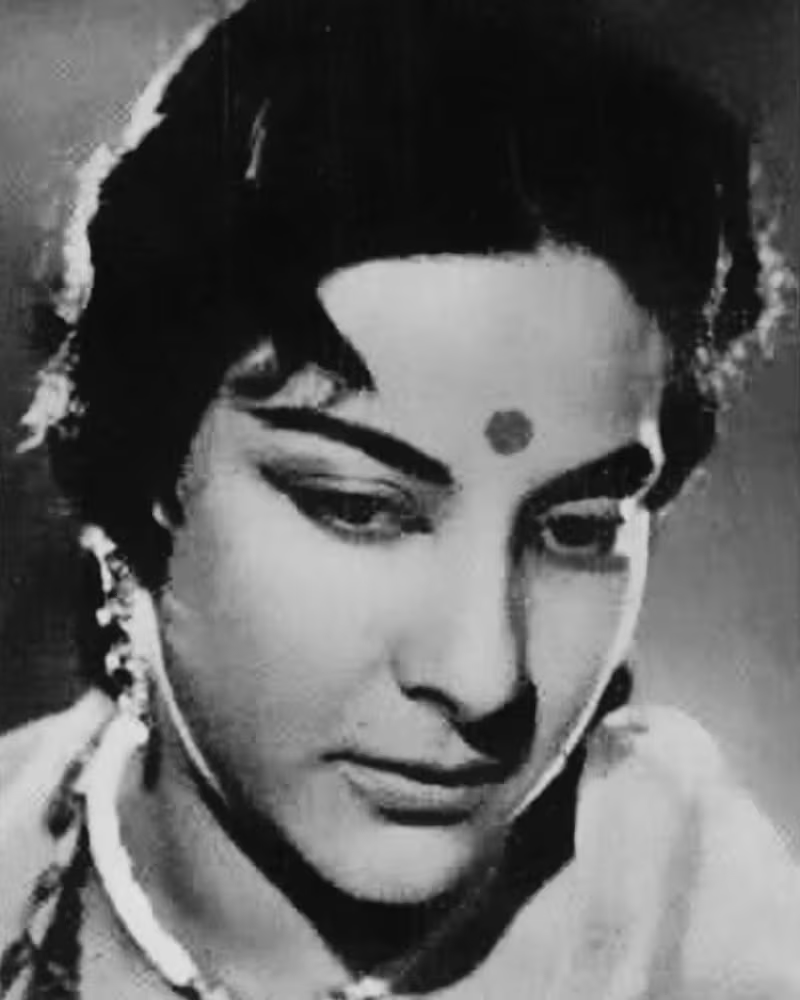
Nargis Dutt - Iconic Actress and Social Worker
In the vast pantheon of Indian cinema, few stars shine with the eternal, incandescent glow of Nargis Dutt. Her name evokes a flood of powerful images: the rain-drenched romantic heroine sharing an umbrella with Raj Kapoor in Shree 420, the tormented woman battling her inner demons in Raat Aur Din, and most enduringly, the stoic, earth-mother Radha in Mother India, a cinematic portrayal that became a national emblem. Nargis was more than an actress; she was a force of nature on screen and a figure of immense grace and compassion off it. Her life, spanning from 1929 to 1981, charts the journey of a child prodigy who became the First Lady of Indian Cinema and, later, a dedicated social worker who touched countless lives beyond the silver screen.
Early Life & Background
Born Fatima Rashid on 1 June 1929, in Calcutta, British India, Nargis was destined for the world of art and performance. Her mother, Jaddanbai, was a formidable and pioneering figure in her own right—a celebrated Hindustani classical singer, actress, and one of India’s very first female film producers and directors. Her father, Uttamchand Mohanchand, was a wealthy doctor from a Mohyal Brahmin family who had converted to Islam to marry Jaddanbai, taking the name Abdul Rashid. The household was a vibrant crucible of creativity, a meeting point for poets, musicians, and thinkers, and it was in this culturally rich environment that young Fatima’s sensibilities were forged.
Her entry into cinema was almost preordained. At the tender age of five, she made her screen debut in the 1935 film Talash-E-Haq, produced by her mother. Billed as ‘Baby Nargis’, a name that would stick with her for life, she showed a natural comfort in front of the camera. Her formal education was intermittent, as the demands of a burgeoning film career soon took precedence. At just 14, she was cast by the legendary director Mehboob Khan as the lead in his 1943 film, Taqdeer. It was with this film that she was formally credited as Nargis, and her journey as one of Hindi cinema's most luminous heroines began.
Career & Major Contributions
Nargis’s career can be seen in distinct, brilliant phases, each marked by iconic collaborations and performances that redefined the role of the heroine in Indian cinema.
The Golden Age with R.K. Films
The late 1940s and 1950s saw the formation of one of Indian cinema's most legendary professional partnerships. In 1948, a young and ambitious Raj Kapoor cast Nargis in his directorial debut, Aag. This marked the beginning of a cinematic collaboration that would produce a string of classics and define an entire era. Together, they starred in 16 films, including timeless hits like Barsaat (1949), Awaara (1951), Shree 420 (1955), and Chori Chori (1956).
Their on-screen chemistry was electric, a perfect blend of passion, vulnerability, and playful charm. Nargis brought a unique modernity and naturalism to her roles. In films like Awaara and Shree 420, she wasn’t merely a passive love interest; she was often a woman of substance and sophistication, an educated professional who was the moral and emotional anchor of the narrative. The iconic image of the two huddled under an umbrella in the song "Pyaar Hua Ikraar Hua" from Shree 420 became a symbol of screen romance for generations. Their professional synergy was so profound that the logo of Kapoor's R.K. Films studio was inspired by a romantic pose from their film Barsaat.
The Pinnacle: Mother India
While her work with Raj Kapoor cemented her stardom, it was her role in Mehboob Khan's 1957 magnum opus, Mother India, that secured her immortality. A remake of Khan’s own 1940 film Aurat, this epic saga was a tribute to the resilience of the Indian farmer and, more specifically, the Indian woman.
Nargis played Radha, a character whose journey spans from a joyous young bride to a hardened, elderly matriarch who endures unimaginable poverty, loss, and suffering to raise her children with integrity. It was a role of staggering emotional and physical demands. Nargis, still in her twenties, convincingly portrayed the character through decades of hardship, infusing Radha with a quiet dignity and an unbreakable will. Her performance was a tour de force, devoid of vanity and filled with raw, visceral emotion. Radha became more than a character; she became a symbol of the nation itself—self-sacrificing, nurturing, and fiercely moral.
Mother India was a colossal success, both in India and abroad. It became the first Indian film to be nominated for the Academy Award for Best Foreign Language Film, famously losing by a single vote. Nargis's performance was universally acclaimed, earning her the Filmfare Award for Best Actress and the Best Actress award at the prestigious Karlovy Vary International Film Festival in 1958.
A New Chapter and a Final Bow
The filming of Mother India brought a pivotal change in Nargis's personal life. During a scene involving a fire, she was trapped amidst the flames, and her co-star, Sunil Dutt, who played her rebellious son Birju, courageously rescued her. This dramatic event sparked a deep connection between the two. On 11 March 1958, Nargis and Sunil Dutt were married. Following her marriage, she chose to step away from the limelight to focus on her family, raising their three children: Sanjay, Namrata, and Priya.
She made one final, unforgettable return to the screen in the 1967 film Raat Aur Din. In a challenging dual role, she played a married woman suffering from a multiple personality disorder. The performance was a stunning display of her versatility and psychological depth, earning her the inaugural National Film Award for Best Actress. It was a fitting and powerful conclusion to one of the greatest acting careers in Indian history.
Legacy & Influence
Nargis Dutt's legacy extends far beyond her cinematic achievements. In the second act of her life, she channeled her fame and influence into profound social work, demonstrating a deep-seated desire to serve her country and its people.
Social Work and Public Service
Together with her husband, Nargis founded the Ajanta Arts Cultural Troupe. This troupe, comprising leading actors and singers of the time, travelled to remote and often dangerous border areas to entertain Indian soldiers. Beginning after the Sino-Indian War of 1962, this became a lifelong commitment, a testament to her patriotism and her empathy for the armed forces.
Her most pioneering work, however, was in the field of healthcare. Nargis became the first patron of The Spastics Society of India (now known as ADAPT - Able Disabled All People Together). She was a tireless and passionate advocate for children with cerebral palsy, working to raise awareness, generate funds, and destigmatize the condition at a time when it was little understood. Her dedicated efforts helped lay the foundation for an organization that has helped thousands of children and families over the decades.
In 1980, in recognition of her immense contributions to Indian arts and society, Nargis was nominated to the Rajya Sabha, the upper house of the Indian Parliament. This appointment acknowledged her status as not just an artist, but a respected public figure and nation-builder.
Final Years and Enduring Memory
Tragically, Nargis was diagnosed with pancreatic cancer shortly after her parliamentary nomination. Despite undergoing extensive treatment in New York, her health declined. She passed away on 3 May 1981, at the age of 51. Her death came just three days before the premiere of her son Sanjay Dutt's debut film, Rocky. At the premiere, a seat was poignantly left vacant in her honour.
Nargis Dutt is remembered today as a woman of extraordinary grace, talent, and substance. The Nargis Dutt Memorial Cancer Foundation was established by Sunil Dutt in 1982 to carry on her fight against the disease. The Nargis Dutt Award for Best Feature Film on National Integration is presented annually at the National Film Awards, a fitting tribute to her spirit. Her image, especially as Radha holding a plough, remains an indelible part of India's cultural consciousness—a symbol of strength, integrity, and the timeless power of the Indian woman.