Overview
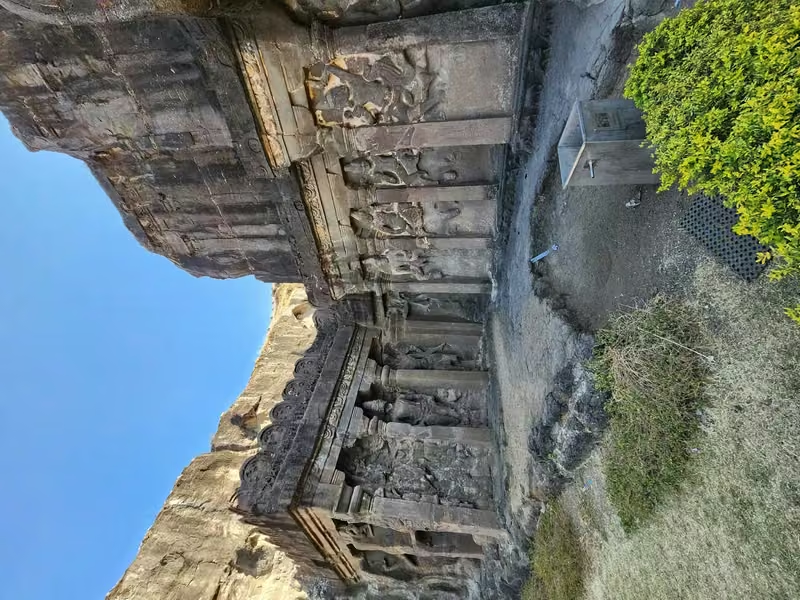
The Ellora Caves stand as one of the most remarkable achievements of ancient Indian rock-cut architecture, representing a continuous tradition of excavation and artistry spanning four centuries. Located in the Aurangabad district of Maharashtra, approximately 30 kilometers northwest of Aurangabad city, this UNESCO World Heritage Site comprises 34 caves carved into the volcanic basalt cliffs of the Charanandri hills. What makes Ellora truly exceptional is not just its scale or artistic merit, but its unique representation of religious harmony - Buddhist, Hindu, and Jain monuments coexist within a single complex, created between 600-1000 CE.
The complex extends over approximately 2 kilometers along the hillside, with caves numbered sequentially from south to north. The Buddhist caves (Caves 1-12) were created first, dating from approximately 600-800 CE. These were followed by the Hindu caves (Caves 13-29), including the magnificent Kailash Temple (Cave 16), constructed during the 8th-9th centuries. The series concludes with the Jain caves (Caves 30-34) from the 9th-10th centuries. This chronological progression reflects the changing religious and political dynamics of the Deccan region during the early medieval period.
The crown jewel of Ellora is undoubtedly the Kailash Temple in Cave 16, which represents the pinnacle of Indian rock-cut architecture. This massive structure, dedicated to Lord Shiva, is not merely a cave but a complete temple complex carved from a single monolithic rock. The artisans worked from top to bottom, removing an estimated 400,000 tons of rock to create this architectural marvel. The temple features intricate sculptures depicting various Hindu deities, mythological narratives from the Ramayana and Mahabharata, and elaborate architectural elements including a gateway, assembly hall, sanctuary, and a courtyard surrounded by colonnaded galleries.
History
Origins and Religious Context
The creation of Ellora Caves began in the 6th century CE during a period of significant religious and cultural evolution in the Deccan region. The site was strategically located along ancient trade routes connecting northern and southern India, making it an important center for religious and commercial activity. The name "Ellora" is believed to derive from the ancient name "Elapura," mentioned in historical inscriptions.
The Buddhist caves, created first, represent the Mahayana and Vajrayana traditions that flourished under the patronage of the Kalachuri and early Chalukya dynasties. These caves served as viharas (monasteries) and chaityas (prayer halls), housing monks and providing spaces for meditation and worship. The multi-storeyed Cave 12 (Teen Thal) exemplifies the architectural sophistication achieved during this early phase.
The Rashtrakuta Period and the Kailash Temple
The most significant phase of construction at Ellora occurred during the reign of the Rashtrakuta dynasty, particularly under King Krishna I (ruled 756-773 CE), who is traditionally credited with commissioning the Kailash Temple. This period marked a golden age of Deccan art and architecture. The Rashtrakutas, who established their capital at nearby Manyakheta (modern Malkhed), invested enormous resources in creating monuments that would demonstrate their power and devotion.
The construction of the Kailash Temple represents an extraordinary feat of planning and execution. Unlike traditional construction methods that build from the ground up, the artisans here had to envision the entire structure in three dimensions before beginning work, as any mistake would be irreversible. The temple was conceived as a representation of Mount Kailash, the mythical abode of Lord Shiva in the Himalayas. The project likely took more than a century to complete, spanning multiple generations of craftsmen who maintained remarkable consistency in design and execution.
The Jain Phase
The final phase of excavation at Ellora came under Jain patronage, likely from wealthy Jain merchants and local rulers who followed Jainism. The Jain caves, though smaller in scale compared to the Kailash Temple, display exquisite craftsmanship and detailed iconography. Cave 32 (Indra Sabha) and Cave 30 (Chhota Kailash or "Little Kailash") showcase the refined artistic sensibilities of late medieval Jain art. These caves feature intricately carved pillars, detailed ceiling paintings, and sculptures of Tirthankaras (Jain spiritual teachers).
Medieval and Colonial Periods
After the 10th century, as political power shifted and religious patronage patterns changed, excavation activity at Ellora ceased. However, the site continued to be known and visited. During the medieval period under various Muslim dynasties ruling the Deccan, the caves were largely left undisturbed, though some damage occurred over time. European travelers and scholars rediscovered Ellora in the colonial period, with detailed documentation beginning in the 19th century. The 1839 lithographs by James Fergusson and Thomas Dibdin represent early systematic attempts to record and study the site's architecture.
Architecture
Buddhist Caves (Caves 1-12)
The Buddhist caves at Ellora represent two distinct types of structures: viharas (monasteries) and chaityas (prayer halls). Cave 10, known as Vishwakarma or "Carpenter's Cave," is the only chaitya-griha (prayer hall) in the Buddhist group and features a striking seated Buddha in a teaching pose. The cave's barrel-vaulted roof and intricate rib patterns demonstrate advanced understanding of structural engineering carved in stone.
Cave 12 (Teen Thal or "Three Storeys") is the largest Buddhist excavation at Ellora, rising three storeys high. It features a large assembly hall with Buddha statues and bodhisattvas carved in relief. The architectural complexity increases with each level, showcasing the evolution of Buddhist monastic architecture. These caves typically include residential cells for monks arranged around a central hall, with water cisterns carved into the rock for daily use.
Hindu Caves (Caves 13-29)
The Hindu caves display the greatest variety in design and iconography, ranging from relatively simple shrines to elaborate temples. Cave 14 (Ravan ki Khai) serves as a transitional cave, incorporating both Buddhist and Hindu elements. Cave 15 (Dashavatara) is a two-storeyed cave featuring the ten avatars of Vishnu and marking the shift toward more complex Hindu iconographic programs.
Cave 21 (Ramesvara) is notable for its exquisite sculptures, including the famous dancing Shiva (Nataraja) panel. The cave demonstrates the refined sculptural style of the 7th century, with figures exhibiting graceful proportions and dynamic poses. Cave 29 (Dhumar Lena) resembles the architectural style of the earlier Elephanta Caves, featuring a cruciform plan and massive pillars.
The Kailash Temple (Cave 16): A Monolithic Marvel
The Kailash Temple represents the apex of rock-cut architecture worldwide. This colossal structure measures approximately 50 meters deep, 33 meters wide, and 30 meters high, carved entirely from a single rock face. The temple complex is designed as a massive chariot, complete with wheels and elephants carved in supporting positions, symbolizing Mount Kailash being transported by celestial beings.
The temple follows a traditional Dravidian architectural plan with a gopura (gateway), a mandapa (assembly hall), an antarala (vestibule), and a garbhagriha (sanctum sanctorum) housing a Shiva linga. The structure is adorned with hundreds of sculptures depicting Hindu mythology. The outer walls feature life-sized elephants appearing to support the structure, while upper levels contain intricate panels illustrating stories from the Ramayana and Mahabharata.
Notable sculptural panels include the depiction of Ravana attempting to lift Mount Kailash, with Shiva calmly pressing down his toe to subdue the demon king's arrogance. Another remarkable panel shows the marriage of Shiva and Parvati, surrounded by celestial beings. The attention to detail extends to the carving of jewelry, clothing folds, and facial expressions, demonstrating the sculptors' extraordinary skill.
Jain Caves (Caves 30-34)
The Jain caves, though created last, maintain high artistic standards. Cave 32 (Indra Sabha) is the finest of the Jain group, featuring two levels. The lower level includes a monolithic shrine in the courtyard, while the upper level houses the main temple. The cave is named after Indra, the king of gods in Jain cosmology, and features a seated figure of Mahavira, the 24th Tirthankara.
The Jain caves are distinguished by their intricate ceiling paintings, some of which retain their original colors even after centuries. These paintings depict flying celestial beings (gandharvas), lotus patterns, and geometric designs. Cave 30 (Chhota Kailash) demonstrates Jain adaptation of Hindu architectural forms, being a smaller version of the Kailash Temple but dedicated to Jain Tirthankaras. The detailed carving of lotus flowers, auspicious symbols, and Tirthankara figures showcases the refinement of late medieval Jain artistic traditions.
Engineering and Construction Techniques
The construction methodology at Ellora required sophisticated planning and execution. Artisans used iron tools to cut the basalt rock, working in the pre-monsoon months when the rock was easier to carve. The vertical cutting technique allowed gravity to assist in removing debris. The precision required to maintain architectural alignment while carving from top to bottom, without the possibility of adding material, demonstrates remarkable spatial visualization and mathematical knowledge.
Water management systems were integrated into the design, with channels carved to divert monsoon rainwater away from the caves. The basalt rock's natural durability has allowed the structures to survive relatively intact for over a millennium, though water seepage during monsoons remains an ongoing conservation challenge.
Cultural and Religious Significance
Symbol of Religious Pluralism
Ellora's unique feature is the coexistence of three major Indian religions - Buddhism, Hinduism, and Jainism - within a single complex. This arrangement reflects the Deccan's historical tradition of religious tolerance and patronage. Unlike sites destroyed due to religious conflict, Ellora's monuments from different faiths have survived together, demonstrating that diverse religious communities could flourish simultaneously under enlightened royal patronage.
The transition from Buddhist to Hindu to Jain excavations also mirrors broader religious and social changes in medieval India, including the gradual decline of Buddhism in mainland India, the resurgence of Hindu devotional movements, and the continued presence of Jain communities supported by merchant patronage.
Artistic and Iconographic Significance
The sculptural programs at Ellora represent encyclopedic attempts to visualize religious mythology and philosophy. The Kailash Temple alone contains hundreds of panels depicting various aspects of Hindu cosmology, mythology, and worship. These visual narratives served educational purposes, communicating religious stories and principles to devotees who might not have access to written texts.
The artistic style at Ellora shows evolution and regional variation. Early Buddhist sculptures display serene, meditative qualities characteristic of Mahayana Buddhism. The Hindu sculptures demonstrate greater dynamism and emotional expression, with figures shown in various dramatic poses. Jain sculptures emphasize serenity and detachment, reflecting Jain philosophical emphasis on renunciation and spiritual liberation.
Pilgrimage and Worship
Throughout history, Ellora has served as an important pilgrimage destination. The Kailash Temple, in particular, attracts thousands of Shiva devotees, especially during the festival of Mahashivratri. The temple's design as a replica of Mount Kailash allowed devotees who could not undertake the arduous journey to the actual Himalayan peak to experience a symbolic pilgrimage.
The cave temples continue to be used for worship by local communities, though religious activities are now regulated to balance devotional use with conservation requirements. This living heritage aspect connects contemporary practitioners with traditions extending back over a millennium.
UNESCO World Heritage Status
Designation and Criteria
Ellora Caves were inscribed on the UNESCO World Heritage List in 1983 during the 7th session of the World Heritage Committee. The site was recognized under three criteria:
Criterion (i): The Ellora Caves represent a masterpiece of human creative genius. The Kailash Temple, in particular, demonstrates extraordinary artistic and technical achievement, being the world's largest monolithic structure carved from a single rock.
Criterion (iii): The site provides exceptional testimony to ancient Indian civilization during the 6th-10th centuries CE, documenting the artistic, architectural, and religious developments of the period.
Criterion (vi): Ellora is directly associated with living religious traditions and contains iconographic representations of major significance to Hindu, Buddhist, and Jain faiths. The site embodies the spirit of tolerance and coexistence fundamental to Indian cultural heritage.
Conservation Significance
UNESCO designation brought international attention to Ellora's conservation needs and facilitated funding for preservation efforts. The Archaeological Survey of India (ASI), in collaboration with UNESCO and international conservation organizations, has implemented systematic conservation programs addressing structural stability, water management, air quality, and visitor impact management.
The World Heritage status has also increased tourism, bringing both economic benefits and conservation challenges. Balancing public access with preservation requirements remains an ongoing priority for site managers.
Visitor Information
Planning Your Visit
A comprehensive visit to Ellora Caves requires 4-5 hours minimum, though enthusiasts may spend an entire day exploring the complex. The caves are open from 6:00 AM to 6:00 PM daily except Tuesdays. The best visiting period is from October to March when temperatures are moderate. Avoid visiting during the monsoon season (June-September) as heavy rains can make the site slippery and some caves may be temporarily closed for safety.
Early morning visits offer the advantage of fewer crowds and better lighting for photography, particularly at the Kailash Temple. The morning sun illuminates the temple's eastern facade, highlighting sculptural details. Late afternoon visits provide softer light conditions ideal for photography but may encounter larger tourist groups.
Entry and Facilities
Entry fees are ₹40 for Indian citizens and ₹600 for foreign nationals. Students with valid ID cards receive discounted admission. The ticket office is located near the main entrance. Audio guides are available for rent in multiple languages, providing detailed historical and architectural information. Licensed guides can be hired at the entrance, though pre-booking is advisable during peak tourist season.
The site includes basic facilities such as parking areas, restrooms, and a cafeteria near the entrance. A gift shop offers books, postcards, and handicrafts. The complex is partially wheelchair accessible, with paved pathways connecting major caves, though some caves involve steps and may be difficult for mobility-impaired visitors.
Suggested Itinerary
For first-time visitors, the following route is recommended:
Kailash Temple (Cave 16): Begin with the highlight of Ellora. Spend 1.5-2 hours exploring the temple complex, including the courtyard, main shrine, and surrounding galleries. Don't miss the Ravana lifting Kailash panel and the marriage of Shiva panel.
Hindu Caves (14, 15, 21, 29): Explore selected Hindu caves to appreciate the variety of styles and iconography. Cave 21's Nataraja sculpture and Cave 15's Dashavatara panels are particularly noteworthy.
Buddhist Caves (10, 12): Visit the Vishwakarma Cave (10) with its impressive Buddha statue and the three-storeyed Cave 12.
Jain Caves (32, 33): Conclude with the Indra Sabha and its well-preserved paintings and intricate carvings.
Photography Guidelines
Photography is permitted throughout the complex for personal use. However, flash photography is strictly prohibited inside the caves as it damages ancient pigments and paintings. Tripods require special permission from ASI authorities. Professional photography and videography for commercial purposes require advance permits and additional fees.
The best photography opportunities include:
- Morning: Eastern facade of Kailash Temple, Buddhist caves
- Afternoon: Western face of Hindu caves, architectural details
- Overcast days: Ideal for sculpture photography with soft, even lighting
What to Bring
- Comfortable walking shoes: Essential for extensive exploration on uneven rock surfaces
- Sun protection: Hat, sunglasses, sunscreen
- Water bottle: Stay hydrated, especially during summer months
- Light backpack: For carrying essentials
- Flashlight: Useful for examining details in darker cave sections
- Binoculars: Helpful for viewing ceiling paintings and high relief sculptures
Safety and Etiquette
- Respect sacred spaces: Many caves remain active worship sites
- Don't touch sculptures: Oils from skin damage ancient stone surfaces
- Watch for bats: Some caves host bat colonies; disturbance should be avoided
- Supervise children: Steep drops and unprotected edges present safety hazards
- Stay on designated paths: Prevent erosion and protect archaeological features
- Dispose of waste properly: Use designated bins to maintain site cleanliness
How to Reach
By Air
The nearest airport is Aurangabad Airport (Chikkalthana Airport), located approximately 35 kilometers from Ellora. The airport has regular flights connecting to major Indian cities including Delhi, Mumbai, Hyderabad, and Bangalore. Pre-paid taxis and app-based cab services are available from the airport to Ellora, taking approximately 45 minutes.
By Rail
Aurangabad Railway Station is the nearest railhead, situated about 32 kilometers from Ellora. The station is well-connected to major Indian cities including Mumbai, Delhi, Hyderabad, and Pune. From the railway station, taxis, auto-rickshaws, and local buses are available to reach Ellora.
By Road
Ellora is well-connected by road to Aurangabad and other nearby cities. Maharashtra State Road Transport Corporation (MSRTC) operates regular bus services from Aurangabad Central Bus Stand to Ellora, with departures every 30 minutes. The journey takes approximately 45 minutes. Private taxis and self-drive rental cars are also available. The route follows NH-211, a well-maintained highway.
From major cities:
- Mumbai: 340 km (6-7 hours)
- Pune: 230 km (4-5 hours)
- Nashik: 180 km (3-4 hours)
Local Transportation
Within Ellora village, local transport options are limited. Most visitors walk between caves or use the site's internal pathways. Electric vehicles may be introduced for elderly and mobility-impaired visitors. Auto-rickshaws are available for short trips within the village.
Nearby Attractions
Ajanta Caves (100 km)
A UNESCO World Heritage Site featuring 30 Buddhist cave temples renowned for their ancient paintings dating from 2nd century BCE to 5th century CE. The frescoes at Ajanta represent masterpieces of Buddhist art and provide invaluable insights into ancient Indian life. Most visitors combine Ajanta and Ellora in a two-day itinerary.
Daulatabad Fort (15 km)
Also known as Devagiri, this imposing hill fortress served as the capital of several medieval dynasties. The fort features impressive defensive architecture, including the famous Chand Minar (Tower of Moon), and offers panoramic views of the surrounding region.
Bibi Ka Maqbara (30 km)
Often called the "Mini Taj Mahal," this 17th-century Mughal mausoleum was built by Emperor Aurangzeb's son in memory of his mother. The monument demonstrates late Mughal architecture and serves as a pleasant afternoon excursion.
Grishneshwar Temple (5 km)
One of the twelve Jyotirlinga shrines dedicated to Lord Shiva, this 18th-century temple attracts numerous pilgrims. The red stone temple features intricate carvings and active worship traditions.
Khuldabad (22 km)
Known as the "Valley of Saints," Khuldabad contains tombs of several important historical figures including the Mughal Emperor Aurangzeb and Sufi saints. The town offers insights into medieval Islamic architecture and spiritual traditions in the Deccan.
Conservation Challenges and Efforts
Current Status
The overall conservation status of Ellora Caves is classified as "good," though various challenges require ongoing attention. The basalt rock has proven remarkably durable, allowing most sculptures to survive in recognizable form after 1,000-1,400 years. However, environmental factors, tourism pressure, and natural weathering continue to impact the site.
Primary Conservation Concerns
Water Seepage: Monsoon rains cause water infiltration through rock fissures, leading to moisture damage, salt crystallization, and weakening of rock structure. The ASI has implemented drainage systems to divert water flow away from sensitive areas, but complete protection remains challenging given the site's geological characteristics.
Air Pollution: Industrial activity in the Aurangabad region, vehicle emissions, and increasing urbanization contribute to atmospheric pollution. Particulate matter and chemical pollutants settle on rock surfaces, causing discoloration and accelerating deterioration. Monitoring stations measure air quality, and efforts to create pollution buffer zones around the site are ongoing.
Biological Growth: The cave environment supports growth of algae, lichens, moss, and other biological organisms that damage rock surfaces and obscure sculptures. Bat colonies in some caves contribute to biological contamination through guano deposits. Conservation teams periodically clean biological growth using approved methods that don't harm the stone.
Tourist Impact: Annual visitor numbers exceeding 500,000 create multiple challenges including physical wear on pathways, humidity fluctuation from body heat, touching of sculptures despite prohibitions, and littering. Visitor management strategies include limiting group sizes, installing barriers around sensitive sculptures, and enhanced monitoring by site guards.
Weathering and Erosion: Natural weathering processes including thermal expansion and contraction, wind erosion, and chemical weathering gradually impact the rock surface. Some sculptures have lost fine details over centuries, though major forms remain intact.
Conservation Initiatives
Archaeological Survey of India (ASI): As the primary custodian, ASI maintains permanent conservation staff at Ellora. Regular inspections identify areas requiring intervention. Conservation work includes structural stabilization, cleaning, documentation, and preventive maintenance.
Digital Documentation: Modern technology assists conservation through photogrammetry, 3D laser scanning, and digital archiving. These techniques create permanent records of current conditions, facilitate monitoring of deterioration rates, and support research without physical contact with fragile surfaces.
Scientific Analysis: Geological studies, materials analysis, and environmental monitoring provide data for evidence-based conservation decisions. Understanding rock composition, weathering mechanisms, and environmental factors allows for targeted interventions.
International Collaboration: UNESCO, ICOMOS, and international conservation organizations provide technical expertise and funding support. Knowledge exchange with other rock-cut heritage sites worldwide contributes to improved conservation methodologies.
Community Engagement: Local community involvement in conservation efforts includes training programs, employment in site maintenance, and awareness campaigns about heritage protection. Educational programs for schools emphasize the importance of preserving cultural heritage for future generations.
Timeline
Buddhist Phase Begins
Excavation of first Buddhist caves (Caves 1-5) initiated under Kalachuri dynasty patronage
Major Buddhist Caves
Construction of larger Buddhist viharas including multi-storeyed Cave 12 (Teen Thal)
Kailash Temple Commissioned
Rashtrakuta King Krishna I orders excavation of the monumental Kailash Temple (Cave 16)
Hindu Caves Expansion
Additional Hindu caves (Caves 14, 15, 21, 29) excavated under continued Rashtrakuta patronage
Kailash Temple Completion
Final sculptural work on Kailash Temple completed after over a century of continuous effort
Jain Caves Begin
Excavation of Jain caves (Caves 30-34) commences with merchant community patronage
Excavation Activity Ceases
Final phase of excavation concludes; site transitions to purely devotional use
European Documentation
European travelers begin recording the caves; early sketches and descriptions appear
Fergusson Survey
James Fergusson conducts detailed architectural survey; lithographs published documenting the complex
UNESCO World Heritage Listing
Ellora Caves inscribed on UNESCO World Heritage List, recognized for outstanding universal value
Major Conservation Project
ASI undertakes comprehensive conservation addressing structural stability and sculptural preservation
Digital Restoration Initiative
Advanced digital techniques employed to restore and document faded murals and paintings
Legacy and Continuing Significance
The Ellora Caves endure as testimony to the extraordinary artistic, architectural, and engineering capabilities of ancient and medieval Indian civilization. The site demonstrates sophisticated understanding of geology, structural engineering, hydraulics, and spatial planning applied to create enduring monuments from living rock. The sculptural programs represent comprehensive visual encyclopedias of Hindu, Buddhist, and Jain mythology and philosophy, providing invaluable primary sources for understanding religious thought and practice.
Ellora's significance extends beyond its historical and artistic value. In an era often characterized by religious division and conflict, Ellora stands as a powerful symbol of pluralism and tolerance. The peaceful coexistence of three different faith traditions within a single sacred landscape offers an inspiring model of mutual respect and shared cultural space. This aspect of Ellora's heritage carries particular relevance for contemporary society.
The ongoing conservation of Ellora presents both challenges and opportunities. Protecting these fragile monuments for future generations requires balancing public access with preservation imperatives, managing environmental threats, and maintaining traditional worship practices while safeguarding archaeological integrity. Success in these efforts depends on sustained commitment from government institutions, heritage professionals, local communities, and the visiting public.
For visitors, Ellora offers transformative experiences connecting contemporary life with ancient spiritual and artistic traditions. Walking through caves carved over a millennium ago, viewing sculptures that moved devotees centuries before our time, and contemplating the dedication and skill of countless unknown artisans creates profound connections across time and culture. Ellora invites not merely observation but reflection on human creativity, religious devotion, and the enduring power of art to communicate across centuries.


