Overview
India Gate stands as one of New Delhi’s most recognizable landmarks and India’s premier war memorial, rising majestically at the eastern end of Rajpath (now renamed Kartavya Path). Designed by the renowned British architect Sir Edwin Lutyens, this imposing 42-meter-high structure was built to commemorate the supreme sacrifice of 74,187 soldiers of the Indian Army who laid down their lives between 1914 and 1921. These brave soldiers fell during the First World War, fighting in distant theaters across France, Flanders, Mesopotamia, Persia, East Africa, Gallipoli, and other regions of the Near and Far East, as well as during the Third Anglo-Afghan War.
The memorial’s walls bear the inscribed names of 13,300 servicemen, including both Indian soldiers and officers from the United Kingdom, serving as an eternal roll of honor. The architectural design deliberately evokes the classical grandeur of ancient Roman triumphal arches, particularly the Arch of Constantine in Rome, while drawing comparisons to other iconic memorial structures such as the Arc de Triomphe in Paris and Mumbai’s Gateway of India. The monument represents a powerful fusion of Imperial architectural ambition and genuine commemoration of military sacrifice.
Since its unveiling in 1931, India Gate has transcended its original purpose as a war memorial to become a symbol of national pride, a gathering place for citizens, and a backdrop for national celebrations and protests. The expansive lawns surrounding the monument have become a beloved public space where Delhi’s residents gather, particularly during pleasant winter evenings, making it both a solemn memorial and a vibrant civic space.
History
Commission and Context
The decision to construct India Gate emerged from the immense sacrifices made by Indian soldiers during the First World War. Over one million Indian troops served in the war, and the memorial was conceived as a tribute to those who never returned home. The British Raj, recognizing the need to honor these fallen soldiers, commissioned the memorial on February 10, 1921, as part of the broader plan to create New Delhi as the imperial capital of British India.
Sir Edwin Lutyens, who was already engaged in designing New Delhi’s grand administrative buildings, was entrusted with creating a war memorial that would be worthy of the sacrifice it commemorated. Lutyens envisioned a structure that would command the ceremonial axis of the new capital city, creating a powerful visual terminus to the grand Rajpath that stretched from the Rashtrapati Bhavan (then the Viceroy’s House).
The memorial was initially conceived as the “All India War Memorial,” reflecting its purpose to honor soldiers from across the Indian subcontinent who had served under the British Indian Army. The geographic spread of the battles commemorated—from the trenches of Europe to the deserts of Mesopotamia and the mountains of Afghanistan—testified to the global nature of Indian military contribution during this period.
Construction
Construction of India Gate began in 1921 and took a full decade to complete. The foundation stone was laid during the same year, marking the beginning of an ambitious engineering and artistic endeavor. The memorial was constructed primarily using red Bharatpur sandstone and granite, materials chosen for their durability and their warm, commanding presence.
The construction process involved detailed craftsmanship, particularly in the inscription of thousands of names on the memorial’s walls. These names were carefully carved into the stone, creating a permanent record of those who had fallen. The names include soldiers and officers from various regiments of the British Indian Army, reflecting the diverse composition of India’s military forces during this period.
The architectural design required precise engineering to achieve the memorial’s imposing height of 42 meters while maintaining structural stability. The arch itself spans 9.1 meters in width, creating a massive opening that frames views along Rajpath. The structure’s design incorporates a shallow bowl at the top, originally intended to be filled with burning oil on special occasions, though this feature was rarely used in practice.
Unveiling and Dedication
India Gate was officially unveiled on February 12, 1931, by the Viceroy of India, Lord Irwin, in a solemn ceremony attended by thousands. The unveiling came at a significant moment in Indian history, occurring during a period of intensifying independence movement and political ferment. The memorial thus emerged into a complex political landscape where its meaning as both an imperial monument and a tribute to Indian sacrifice carried multiple layers of significance.
The inscription on India Gate reads: “To the dead of the Indian Armies who fell and are honoured in France and Flanders, Mesopotamia and Persia, East Africa, Gallipoli and elsewhere in the near and the far-east and in sacred memory also of those whose names are here recorded and who fell in India or the north-west frontier and during the Third Afghan war.” This comprehensive dedication reflects the global scope of Indian military service and sacrifice.
Post-Independence Evolution
Following India’s independence in 1947, India Gate’s significance evolved from an imperial memorial to a national monument representing Indian military valor. The structure that had been built by the British Raj to commemorate colonial soldiers became a symbol of Indian national pride and military tradition.
In 1971, following the Indo-Pakistani War of 1971, the Amar Jawan Jyoti (Flame of the Immortal Soldier) was established beneath the arch of India Gate. This eternal flame, burning continuously beneath the memorial, honored the soldiers who had died in the 1971 war and subsequent conflicts. A black marble cenotaph with a reversed rifle, capped by a war helmet and surrounded by four urns, marked the site of the flame, adding another layer of commemoration to the memorial.
For five decades, the Amar Jawan Jyoti became an integral part of India Gate’s identity. Military ceremonies, wreath-laying by visiting dignitaries, and national observances regularly took place at this flame. However, in 2022, as part of the completion of the new National War Memorial complex adjacent to India Gate, the Amar Jawan Jyoti flame was ceremonially merged with the flame at the National War Memorial, marking a significant transition in India’s approach to military commemoration.
Architecture
Design Philosophy
Edwin Lutyens’ design for India Gate represents a masterful interpretation of the classical triumphal arch tradition adapted to serve as a war memorial. The architect drew inspiration from ancient Roman architecture, particularly the triumphal arches that celebrated military victories and honored fallen soldiers in ancient Rome. However, Lutyens infused the design with elements that would resonate in the Indian context while maintaining the imperial grandeur expected of a structure on New Delhi’s ceremonial axis.
The memorial stands as a freestanding arch, its massive scale designed to be visible from great distances along the perfectly straight Rajpath. This positioning was deliberate—Lutyens intended India Gate to serve as the visual culmination of the ceremonial approach to the government buildings, creating a powerful axis of imperial power and military honor.
Structural Elements
The memorial rises to a height of 42 meters, constructed primarily from red Bharatpur sandstone that gives the structure its distinctive warm, earthy tone. The arch itself spans 9.1 meters, creating a monumental opening that frames views and allows passage beneath. The massive pylons supporting the arch convey both strength and solemnity, appropriate for a memorial honoring military sacrifice.
The design incorporates a shallow dome or bowl at the apex of the structure, though this feature is often overlooked from ground level. Originally, this bowl was intended to be filled with burning oil during special commemorative occasions, though in practice this occurred rarely if at all. The overall silhouette of the memorial—a massive arch topped by a shallow dome—creates a distinctive profile that has become one of Delhi’s most recognizable landmarks.
The memorial’s proportions were carefully calculated to convey monumentality without overwhelming ornamentation. Unlike many triumphal arches that feature elaborate sculptural programs, India Gate maintains a relatively austere appearance, with its primary decoration consisting of the inscribed names of the fallen and simple architectural moldings.
Inscriptions and Dedications
The most significant architectural feature of India Gate is the inscription of 13,300 names of soldiers and officers who died in the First World War and the Third Anglo-Afghan War. These names are carved into the surfaces of the memorial, organized by regiment and unit. The inscriptions represent a massive undertaking of memorial craftsmanship, creating a permanent record of those who fell in service.
The primary dedicatory inscription appears prominently on the memorial, stating its purpose in clear, formal language. Additional inscriptions identify the battles and theaters of war where Indian soldiers fought and died. The careful organization of names by military unit helps visitors understand the regimental structure of the British Indian Army and the diverse regions of India from which soldiers were drawn.
The inscriptions are executed in a clear, legible style that has weathered remarkably well over nine decades, though environmental pollution has begun to affect the stone surfaces in recent years. The names serve not merely as decoration but as the memorial’s primary function—ensuring that individual soldiers are remembered by name rather than merely as anonymous casualties of war.
Architectural Comparisons
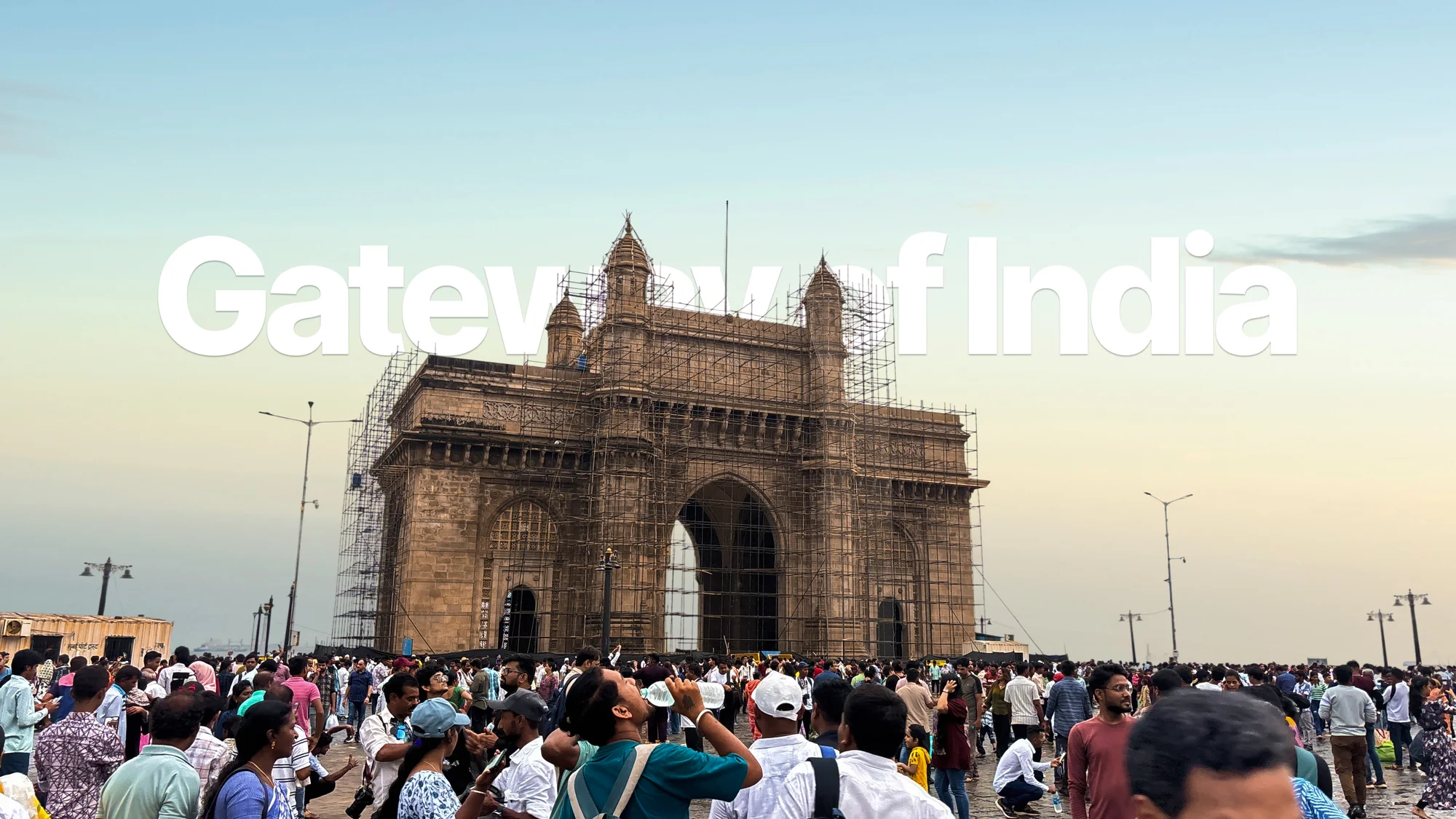
India Gate is frequently compared to other triumphal arches and war memorials worldwide, particularly the Arc de Triomphe in Paris and the Gateway of India in Mumbai. While these comparisons are apt—all three structures employ the triumphal arch form and serve commemorative purposes—each possesses distinct characteristics.
The Arc de Triomphe is more elaborately decorated with sculptural reliefs depicting military victories, while India Gate maintains a more austere appearance focused on inscribed names. The Gateway of India, built to commemorate the visit of King George V and Queen Mary to India, serves a different ceremonial function, though it shares the Indo-Saracenic architectural vocabulary that was popular in early 20th-century India.
India Gate’s design also evokes the Arch of Constantine in Rome, particularly in its basic proportions and the use of a single large arch rather than a central arch flanked by smaller passages. This connection to ancient Roman precedent was deliberate, linking British imperial power to the classical tradition and positioning India Gate within a long lineage of military memorials.
Cultural Significance
Evolution of Meaning
India Gate’s cultural significance has evolved dramatically since its construction. Originally conceived as an imperial war memorial honoring soldiers who died serving the British Raj, the monument has been reinterpreted through the lens of Indian independence and national identity. Today, it stands primarily as a symbol of Indian military valor and sacrifice, with its imperial origins forming a complex historical backdrop rather than its primary meaning.
The memorial has become a focal point for national observances, particularly on Republic Day (January 26) when a grand military parade proceeds along Rajpath, passing by India Gate. The monument serves as a backdrop for displays of military might and national pride, transforming from a colonial memorial into a symbol of independent India’s strength and sovereignty.
Public Space and Civic Life
Beyond its function as a memorial, India Gate has become one of Delhi’s most important public spaces. The expansive lawns surrounding the monument attract thousands of visitors daily, particularly during pleasant weather. Families picnic on the grass, vendors sell ice cream and snacks, and the space serves as a democratic gathering place where people from all walks of life intermingle.
This transformation of India Gate into a vibrant public space represents an interesting evolution from its original solemn purpose. While the memorial remains a site of official commemoration and military ceremony, it has simultaneously become a place of leisure and recreation. Evening visits are particularly popular, when the monument is illuminated and the temperature cools, creating a festive atmosphere that coexists with the memorial’s commemorative function.
Site of Protest and Democracy
India Gate and its surrounding area have also become significant sites for political protest and democratic expression in independent India. The wide, open spaces and the monument’s symbolic importance make it a natural gathering point for demonstrations, vigils, and public expressions of political sentiment. Notable protests and gatherings at India Gate have addressed issues ranging from corruption to violence against women, with the 2012 protests following the Delhi gang rape case being particularly significant.
This use of India Gate as a site of protest and political expression represents a reclamation of public space and a reinterpretation of the monument’s significance. The memorial that was built to honor service to the British Raj has become a space where citizens assert their democratic rights and demand accountability from their government—an ironic but powerful transformation.
The Amar Jawan Jyoti and National War Memorial
Establishment of Amar Jawan Jyoti
The Amar Jawan Jyoti (Flame of the Immortal Soldier) was established beneath India Gate on January 26, 1972, following India’s decisive victory in the 1971 Indo-Pakistani War that led to the liberation of Bangladesh. Prime Minister Indira Gandhi lit the flame, which burned continuously for the next 50 years, becoming an integral part of India Gate’s identity and significance.
The site featured a black marble cenotaph inscribed with the words “Amar Jawan” (Immortal Soldier), with a reversed rifle crowned by a soldier’s helmet, representing the unknown soldier. Four urns positioned at the corners of the cenotaph marked the eternal flame. This memorial within a memorial added a distinctly Indian layer of commemoration to the British-era structure, honoring post-independence military sacrifices.
Transition to National War Memorial
In 2022, following the completion of the new National War Memorial complex adjacent to India Gate, the Amar Jawan Jyoti flame was ceremonially merged with the eternal flame at the National War Memorial. This transfer was conducted with full military honors on January 21, 2022, marking the end of an era for India Gate while establishing the National War Memorial as the primary site for honoring India’s war dead.
The decision to relocate the flame generated some controversy and public discussion, as the Amar Jawan Jyoti had become deeply embedded in Indian consciousness over five decades. However, the government emphasized that the National War Memorial provides a more comprehensive and dedicated space for honoring all of India’s military martyrs from post-independence conflicts, with walls inscribed with the names of over 25,000 soldiers who have died in service to independent India.
Conservation and Challenges
Environmental Threats
India Gate faces significant conservation challenges, primarily from air pollution that affects the red sandstone from which it is constructed. Delhi’s severe air quality issues, particularly during winter months, have accelerated the deterioration of the stone surfaces. Acid rain and particulate pollution create a chemical reaction with the sandstone, leading to surface erosion and discoloration.
The inscribed names on the memorial are particularly vulnerable to this environmental damage. As the stone surfaces erode, the carved inscriptions become less legible, threatening the memorial’s primary function of preserving the names of fallen soldiers. Conservation efforts must balance the need to protect the stone with the desire to maintain the monument’s original appearance and authenticity.
Tourism and Wear
The memorial’s popularity as a tourist destination and public gathering space creates additional conservation challenges. Millions of visitors annually, combined with the general public use of the surrounding lawns, create wear patterns and potential damage. While visitors are not permitted to climb on the memorial structure itself, the sheer volume of foot traffic in the area contributes to environmental pressures.
Security concerns in the post-independence era have also necessitated restrictions on access and modifications to the site that balance public access with protection of the monument and safety considerations. The area around India Gate has been modified multiple times to accommodate both security needs and its function as a public space.
Conservation Efforts
The Archaeological Survey of India (ASI), which maintains responsibility for India Gate, conducts regular conservation work to preserve the memorial. This includes cleaning the stone surfaces, consolidating deteriorating areas, and monitoring structural stability. Conservation approaches must be careful to preserve the original stone and inscriptions while preventing further deterioration.
Recent conservation discussions have focused on implementing more comprehensive environmental protection measures, potentially including controlled access areas and improved air quality monitoring. The challenge remains balancing India Gate’s multiple functions—as a war memorial, a public space, and a national symbol—while ensuring its preservation for future generations.
Visitor Information
Experiencing India Gate
India Gate is accessible 24 hours a day, year-round, and entry to the area is free of charge. The memorial is best experienced during early morning hours for peaceful contemplation or during evening hours when the structure is illuminated. The evening illumination transforms India Gate into a dramatic sight, with lighting that emphasizes its architectural features and creates a striking backdrop for photography.
The surrounding lawns are most enjoyable during the winter months (October through March) when Delhi’s weather is pleasant. Summer visits (April through June) can be extremely hot, with temperatures often exceeding 40°C (104°F), making outdoor time uncomfortable. The monsoon season (July through September) brings humidity and occasional heavy rains.
Nearby Attractions
India Gate’s location at the heart of New Delhi’s ceremonial district places it near several other significant monuments and attractions:
-
Rashtrapati Bhavan (President’s House): Located at the western end of Rajpath, approximately 2.5 km from India Gate, this massive building designed by Edwin Lutyens serves as the official residence of India’s President.
-
National War Memorial: Adjacent to India Gate, this recently completed memorial honors all Indian military personnel killed in action since independence.
-
National Museum: Located approximately 1 km away, this museum houses an extensive collection of Indian art, archaeological artifacts, and historical objects spanning 5,000 years of Indian history.
-
Parliament House: Part of Lutyens’ Delhi design, the circular Parliament building is located near Rajpath and can be viewed from a distance (public access requires special permission).
Photography and Documentation
Photography is freely permitted at India Gate, making it one of Delhi’s most photographed monuments. The memorial offers excellent photographic opportunities at different times of day:
- Dawn: Soft morning light and fewer crowds create ideal conditions for architectural photography
- Sunset: Golden hour light provides warm tones and dramatic shadows
- Blue Hour: The period just after sunset when the sky turns deep blue creates stunning contrast with the illuminated memorial
- Night: Full illumination creates dramatic photographs, though tripods may be subject to security restrictions
The wide lawns and unobstructed views allow photography from various angles and distances, enabling both close-up detail shots of inscriptions and wide-angle compositions showing the memorial in its urban context.
Timeline
World War I Begins
Over one million Indian soldiers serve in the First World War, fighting in theaters across Europe, Africa, and Asia
Foundation Stone Laid
Construction of India Gate begins on February 10, 1921, designed by Sir Edwin Lutyens as the All India War Memorial
Official Unveiling
Viceroy Lord Irwin unveils India Gate on February 12, 1931, dedicating it to 74,187 fallen soldiers
Indian Independence
Following independence, India Gate transitions from imperial memorial to symbol of Indian military sacrifice
Amar Jawan Jyoti Established
Prime Minister Indira Gandhi lights the eternal flame beneath India Gate to honor soldiers of the 1971 war
Flame Relocated
Amar Jawan Jyoti flame merged with National War Memorial flame, marking transition in India's military commemoration
Legacy and Contemporary Significance
India Gate remains one of India’s most powerful symbols, representing the complex intersection of colonial history, military sacrifice, national identity, and public space. Its transformation from an imperial memorial to a national monument reflects India’s journey from colony to independent nation, while its continued importance in civic life demonstrates how historical monuments can be reinterpreted and reappropriated by successive generations.
The memorial’s enduring power lies in its dual nature—it serves simultaneously as a solemn space for remembering military sacrifice and as a vibrant public gathering place for everyday civic life. This combination of sacred and secular uses, of official commemoration and popular recreation, makes India Gate uniquely significant in India’s urban and memorial landscape.
As India continues to develop and modernize, India Gate stands as a fixed point in Delhi’s rapidly changing cityscape, a reminder of historical sacrifice and a gathering place for contemporary citizens. Its preservation and continued significance into the future depend on balancing conservation needs, security requirements, and the monument’s essential function as both memorial and public space.
See Also
- New Delhi - The planned capital city of which India Gate forms a central element
- British Raj - The colonial power that commissioned India Gate
- Edwin Lutyens - The architect who designed India Gate and much of New Delhi
- World War I and India - The conflict that India Gate commemorates
- National War Memorial - The contemporary memorial adjacent to India Gate