
The Day India Got Its Constitution: Birth of the World’s Longest Democratic Charter
The calendar pages of the Constituent Assembly had been turning for two years, eleven months, and eighteen days. In the halls where India’s future was being written word by painstaking word, the air itself seemed weighted with history. Outside, a newly independent nation—barely two and a half years removed from the trauma of Partition—waited with a mixture of hope and uncertainty. Inside, the architects of India’s constitutional framework prepared to sign their names to what would become the longest written national constitution in the world.
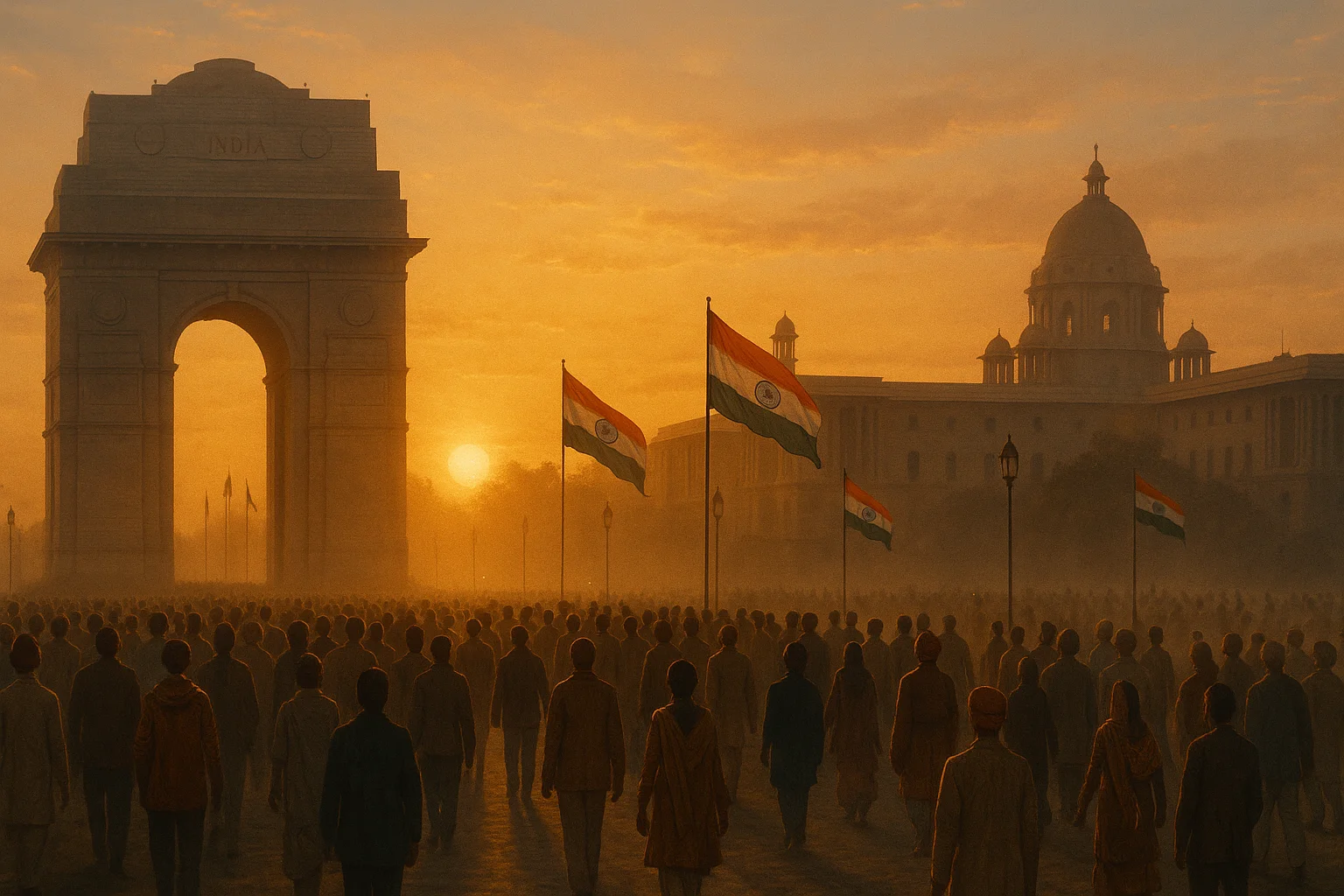
January 26, 1950 dawned crisp and clear over Delhi. The date had been chosen deliberately, marking the anniversary of the Purna Swaraj declaration of 1930, when the Indian National Congress had proclaimed complete independence as its goal. Now, twenty years later, that independence would be given its permanent legal skeleton—a supreme document that would demarcate not just the structure of government, but the fundamental rights and duties that would bind together a civilization as diverse and complex as any the world had ever seen.
The document that lay ready for final adoption was no ordinary piece of legal drafting. It was the culmination of thousands of hours of debate, compromise, and visionary thinking. Every clause had been argued over, every word weighed for its implications across generations yet unborn. The Constitution would establish the framework for fundamental political code, structure, procedures, powers, and duties of government institutions. More than that, it would set out fundamental rights, directive principles, and the duties of citizens—creating a social contract of unprecedented scope and ambition.
The World Before
To understand the magnitude of what the Constituent Assembly achieved, one must grasp the India that existed in those immediate post-independence years. The nation that came into being on August 15, 1947, was simultaneously ancient and newborn—a land with millennia of civilizational continuity suddenly carved into two, with wounds still fresh and bleeding.
The Partition had been catastrophic. Millions had been displaced, hundreds of thousands killed in communal violence that swept across the newly drawn borders. Refugees streamed in both directions—Hindus and Sikhs fleeing westward from what was now Pakistan, Muslims heading east. The administrative machinery of the British Raj had been split, often arbitrarily. Assets had to be divided, railway systems separated, even library books allocated between the two new nations.
In this context of chaos and trauma, the task of writing a constitution seemed almost impossibly ambitious. Yet it was precisely because of this chaos that a strong constitutional framework was so desperately needed. India had to be held together not by force or imperial diktat, but by a shared commitment to democratic principles and the rule of law.
The diversity that needed to be accommodated was staggering. India contained speakers of hundreds of languages, followers of multiple religions, members of thousands of castes and sub-castes. There were princely states that had to be integrated, tribal communities with their own traditions, regions with wildly different levels of economic development. The British had ruled through a combination of direct control and indirect manipulation of these divisions. Now, a new system had to unite what colonialism had purposely kept divided.
Moreover, the global context of 1950 demanded careful consideration. The world was rapidly polarizing into Cold War camps. Newly independent nations across Asia and Africa were watching to see whether democracy could work in a post-colonial society, or whether authoritarian models—communist or fascist—would prove more effective at modernization and development. India’s constitutional choices would resonate far beyond its borders.
The challenge was not merely to create any constitution, but to create one that could serve as the supreme legal document for this impossibly complex society—a document that would stand above all other laws, that would bind together a nation threatening to fragment along a thousand different fault lines.
The Players
At the center of the constitutional enterprise stood Bhimrao Ramji Ambedkar, appointed as the chairman of the Constitution Drafting Committee. Born into a Mahar family—considered “untouchable” in the Hindu caste hierarchy—Ambedkar had overcome extraordinary discrimination to become one of the most educated men in India, with doctorates from Columbia University and the London School of Economics. His personal experience of caste oppression gave him an urgent commitment to enshrining equality and social justice in the constitutional framework.
Ambedkar approached the task with meticulous scholarship. He studied constitutions from around the world—American federalism, British parliamentary traditions, Irish directive principles, Canadian constitutional structures. But he was no mere copyist. Every provision he recommended was adapted to Indian conditions, every borrowed concept reshaped to serve Indian needs. He understood that the Constitution would need to be both aspirational and practical, setting out ideals while creating workable institutions.
His role went beyond mere technical drafting. Ambedkar became the primary defender of the Constitution in debates, articulating the reasoning behind controversial provisions, finding compromises when the Assembly threatened to deadlock. His speeches during these debates revealed a mind of extraordinary clarity and a deep understanding of how laws shape societies over time.
Jawaharlal Nehru, as Prime Minister-designate and president of the Constituent Assembly for much of its existence, provided political leadership to the constitutional process. His vision of a secular, socialist, democratic India—rooted in scientific temper and industrial modernization—profoundly influenced the directive principles that would guide government policy. Nehru understood that the Constitution was not just a legal document but a social charter, an instrument for transforming Indian society from feudal hierarchies toward democratic equality.
The Constituent Assembly itself comprised 299 members, representing the diverse regions, religions, and viewpoints of India. There were prominent lawyers who brought legal expertise, political veterans who understood power and compromise, idealists who insisted on enshrining noble principles, and pragmatists who worried about creating workable institutions.
These assembly members engaged in substantive debate on every major provision. Unlike rubber-stamp bodies that merely ratify predetermined decisions, the Constituent Assembly was a genuine deliberative forum. Members disagreed vehemently on issues ranging from the rights of minorities to the powers of provinces versus the central government, from land reform to the role of religion in public life.
The diversity of the Assembly was both its strength and its challenge. Creating consensus among such varied viewpoints required endless negotiation and compromise. Yet this very diversity ensured that the final Constitution reflected not a narrow party ideology but a broad national consensus.
Rising Tension
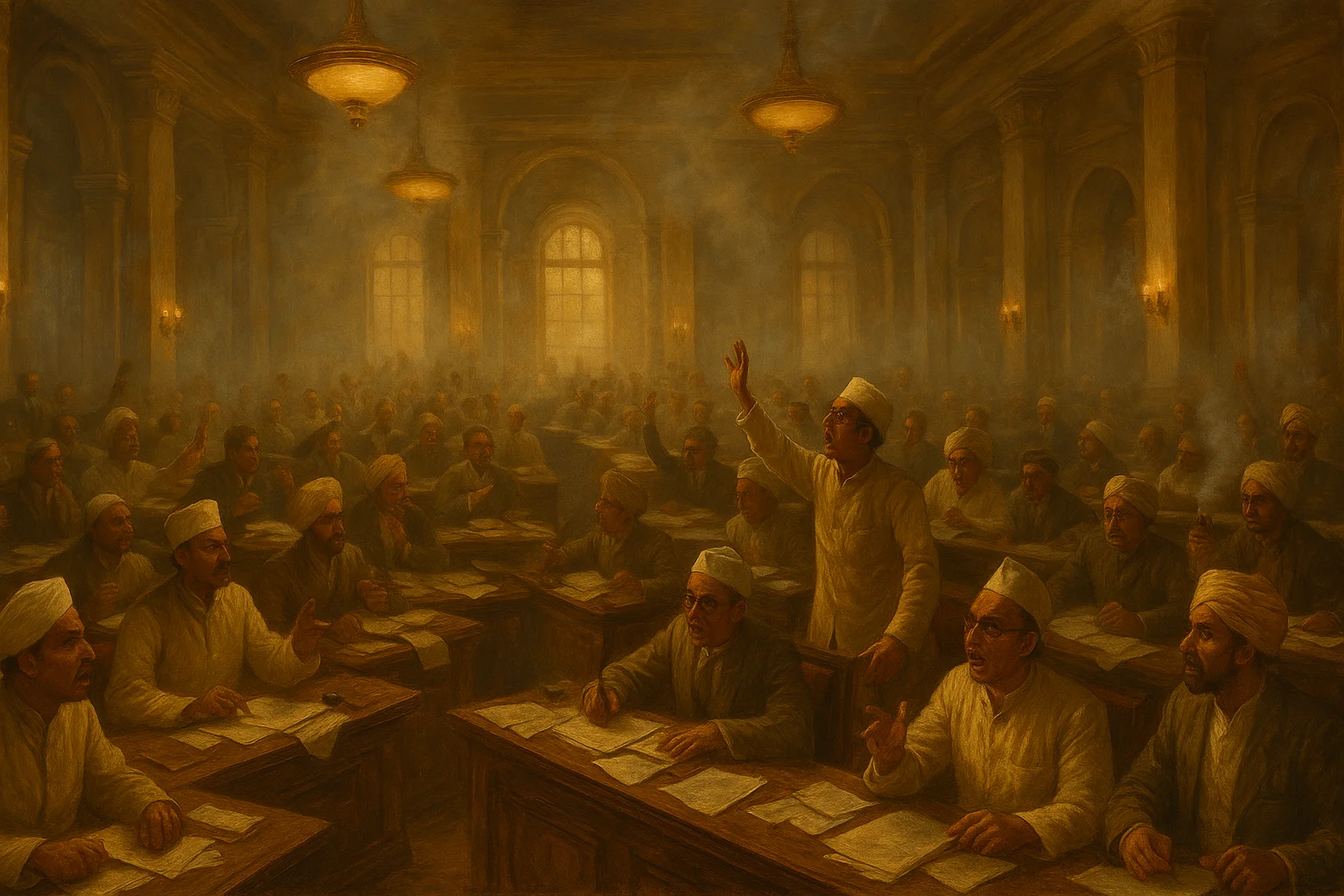
The drafting process was anything but smooth. From the beginning, fundamental questions provoked heated debate. Should India be a unitary state or a federation? How much autonomy should provinces have? What would be the status of the princely states that had acceded to India? Each question had passionate advocates on multiple sides.
One of the most contentious issues concerned fundamental rights. Should the Constitution enumerate specific rights that citizens could claim against the state? What should those rights include? Property rights became particularly controversial. Conservative members wanted strong protections for private property, while socialist-leaning members insisted that land reform and redistribution were essential for social justice. The compromise eventually reached—protecting property rights while allowing for compensation during nationalization—satisfied neither camp completely but prevented the Assembly from fragmenting.
The treatment of minorities generated intense discussion. Recent memories of Partition made this especially sensitive. Muslim members of the Assembly worried about their community’s position in a Hindu-majority nation. Ambedkar and others insisted that the Constitution must protect minority rights not through separate electorates—which had proven divisive under British rule—but through fundamental rights applicable to all citizens equally, supplemented by specific protections where needed.
Language policy threatened to derail the entire enterprise. India’s linguistic diversity was immense, with no language spoken by a majority of the population. Hindi speakers wanted their language recognized as the sole official language. Non-Hindi speakers, particularly from southern India, strongly resisted what they saw as linguistic imperialism. The issue was so divisive that the Assembly had to defer final decisions, eventually adopting a compromise that made Hindi the official language while continuing English as an associate official language for fifteen years.
The Question of Directive Principles
One innovative aspect of the Constitution was the inclusion of Directive Principles of State Policy—provisions that were not legally enforceable but that directed government policy toward specific social and economic goals. This concept, borrowed from the Irish Constitution, generated substantial debate.
Critics argued that non-enforceable provisions had no place in a legal document. Why include guidelines that courts couldn’t enforce? Wouldn’t this create confusion and cynicism? Defenders responded that the Directive Principles reflected aspirations—the kind of society India wanted to become. They would guide policy even if they couldn’t be legally mandated. The Constitution, in this view, was not merely a procedural framework but a social charter, articulating national goals alongside governmental structures.
The specific directive principles reflected India’s development challenges. Provisions called for the state to promote the welfare of the people, to ensure adequate means of livelihood, to work toward reducing inequality, to provide free and compulsory education for children, to promote cottage industries, and to organize village self-government. These represented commitments to social justice and economic development—aspirations that would take generations to fulfill but that deserved constitutional recognition.
The Structure of Government
Debates over governmental structure revealed competing visions of democracy. Should India adopt a presidential system like the United States, with a strong elected executive? Or should it follow the British parliamentary model, with the executive drawn from and accountable to the legislature? The Assembly opted for the parliamentary model, but with significant modifications suited to Indian conditions.
The relationship between the central government and the provinces generated endless discussion. India’s size and diversity seemed to demand federalism, with substantial powers reserved to provincial governments. Yet recent experience with Partition made many fear that too much provincial autonomy could lead to national fragmentation. The Constitution ultimately created what scholars would later call a “quasi-federal” system—federal in structure but with strong provisions allowing central intervention during emergencies.
The judiciary’s role provoked debate about balancing democratic accountability with constitutional protection. Should unelected judges have the power to strike down laws passed by democratically elected legislatures? The Assembly ultimately established judicial review, creating a Supreme Court with power to interpret the Constitution and nullify laws that violated it. This made the Constitution genuinely supreme—above both legislative and executive authority.
The Turning Point
As 1949 drew to a close, the Constituent Assembly entered its final phase. The Draft Constitution had been debated clause by clause, amended in hundreds of places, refined through countless hours of discussion. Now came the moment to adopt it as a whole and set a date for it to come into force.
The decision to make January 26, 1950 the date of commencement was laden with symbolism. Exactly twenty years earlier, on January 26, 1930, the Indian National Congress had declared Purna Swaraj—complete independence—as its goal and had called for Indians to celebrate that day as Independence Day. Though actual independence had come on August 15, 1947, choosing January 26 as Republic Day honored that earlier declaration and connected constitutional democracy to the independence movement.
On November 26, 1949, the Constituent Assembly formally adopted the Constitution. Members signed the document—both English and Hindi versions—in a ceremony filled with emotion. For many present, it represented the culmination of life’s work, the fulfillment of dreams for which comrades had been imprisoned and martyred. The document they signed contained 395 articles divided into 22 parts, along with 8 schedules. It was, and remains, the longest written national constitution in the world.
The length was not accidental verbosity but reflected the document’s comprehensive scope. It didn’t just outline governmental structure but set out fundamental rights in detail, established directive principles, made provisions for scheduled castes and tribes, laid out procedures for constitutional amendment, specified emergency provisions, addressed financial relations between center and states, created constitutional bodies for elections and auditing, and much more.
Between November 26, 1949 and January 26, 1950, India existed in constitutional limbo. The Constitution had been adopted but not yet commenced. Government continued under the adapted Government of India Act of 1935. Preparations accelerated for the formal transition to republic status. The ceremonial aspects had to be planned—the oath-taking, the official proclamation, the celebrations that would mark this historic transformation.
January 26, 1950 arrived with anticipation building throughout the nation. In Delhi, elaborate preparations had been made for a grand ceremony. Dr. Rajendra Prasad, who had been president of the Constituent Assembly, would become India’s first President under the new Constitution. The Governor-General system—the last vestige of British imperial presence—would end, replaced by an elected president serving as constitutional head of state.
The ceremony at Government House marked the formal commencement of the Constitution. As the clock struck the appointed hour, India became a republic—a sovereign democratic republic, as the Constitution’s preamble proclaimed. The supreme legal document of India was now in force. Every law, every government action, every exercise of power would henceforth have to conform to its provisions or be struck down as unconstitutional.
The transformation was simultaneously revolutionary and peaceful. No violence marked the transition, no coup or upheaval. A new constitutional order simply came into being at the designated moment, recognized and accepted throughout the country. This itself was remarkable—that so fundamental a change could occur so smoothly in a nation that had experienced such recent trauma.
Aftermath
The immediate aftermath of the Constitution’s commencement was deceptively calm. Government continued, Parliament functioned, courts operated. But beneath this surface continuity, profound changes were beginning to work themselves through the system.
The fundamental rights provisions immediately altered the legal landscape. Citizens could now challenge laws and government actions in court as violations of their constitutional rights. The Supreme Court began receiving petitions under the new system of constitutional jurisprudence. Judges had to interpret provisions, establishing precedents that would guide future cases.
The directive principles, though not justiciable, began influencing policy debates. Political parties had to articulate how their programs aligned with constitutional directives toward social welfare and economic justice. The Constitution became not just a legal framework but a standard against which political performance could be measured.
The integration of princely states proceeded with constitutional legitimacy. States were reorganized, eventually on linguistic lines, with the Constitution providing the framework for these changes. The federal structure proved flexible enough to accommodate India’s diversity while maintaining national unity.
The first general elections under the Constitution took place in 1951-52—a massive democratic exercise in a largely illiterate nation. The Constitution’s provisions for universal adult suffrage were implemented, giving every adult citizen the right to vote regardless of caste, class, gender, education, or wealth. This represented a radical democratic commitment unprecedented in a nation with such poverty and illiteracy.
Legacy
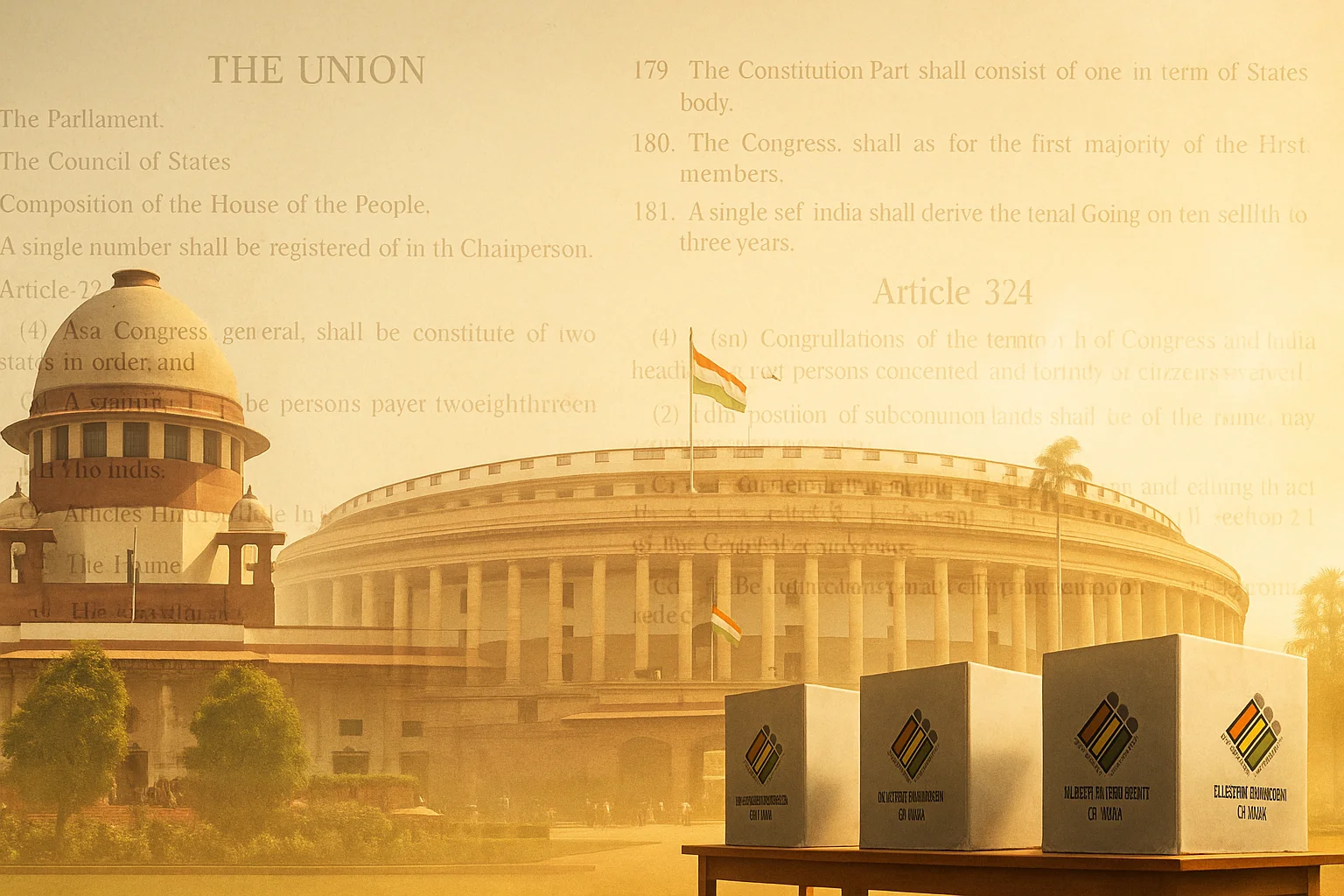
The Constitution’s true significance emerged over subsequent decades as it proved itself adaptable to changing circumstances while maintaining core democratic principles. As the supreme legal document of India, it provided stability through political crises, guided the nation through wars and emergencies, and served as the ultimate arbiter when conflicts arose between different organs of government or between the state and citizens.
The length and comprehensiveness that made it the world’s longest written national constitution proved to be strengths rather than weaknesses. The detailed enumeration of rights provided clear standards for judicial review. The extensive provisions for governmental structure reduced ambiguity about powers and procedures. The directive principles kept social justice goals constitutionally prominent even as governments changed.
The Constitution demonstrated remarkable resilience. It survived the authoritarian Emergency of 1975-77 when many feared democracy itself might be suspended permanently. The constitutional framework ultimately reasserted itself, with electoral democracy restored and civil liberties reinstated. This proved that the Constitution was more than mere parchment—it had become embedded in India’s political culture.
The fundamental rights provisions gradually expanded in interpretation. Courts developed doctrines that protected individual liberty while accommodating necessary state action. The right to equality became a powerful tool for addressing caste discrimination. Freedom of speech, though subject to “reasonable restrictions,” created space for dissent and criticism of government.
The Constitution’s flexibility allowed for amendments—more than 100 to date—adapting the document to changing needs while preserving its basic structure. This amendability prevented constitutional rigidity from blocking necessary changes, while judicial doctrines like the “basic structure” principle ensured that amendments couldn’t destroy the Constitution’s fundamental character.
For other newly independent nations, India’s Constitution offered an important example. It demonstrated that democracy could function in a diverse, largely poor, post-colonial society. The detailed enumeration of rights, the federal structure accommodating diversity, the directive principles linking constitutionalism to social justice—all these became reference points for constitution-makers elsewhere.
The document that demarcates fundamental political code, structure, procedures, powers, and duties of government institutions, while setting out fundamental rights, directive principles, and duties of citizens, proved to be not merely adequate but visionary. Its framers had created something simultaneously rooted in India’s specific circumstances and universal in its democratic aspirations.
What History Forgets
Amid the grand narratives of constitutional adoption, certain human details often get lost. The Constituent Assembly members worked without air conditioning through Delhi’s brutal summers, debating in sweltering heat with only ceiling fans providing minimal relief. The physical discomfort of creating a constitution rarely appears in historical accounts, yet these men and women persevered through conditions that would seem intolerable today.
The clerical work behind the Constitution was enormous. Every draft had to be typed, reproduced, and distributed to Assembly members. Amendments had to be incorporated, revised drafts prepared. Before modern computers and word processors, this meant armies of typists and clerks working behind the scenes. The Constitution’s calligraphic version—beautifully illustrated with art representing India’s cultural heritage—took months to prepare, a painstaking artistic as well as legal achievement.
Women members of the Constituent Assembly, though few in number, made significant contributions that shaped provisions on equality and social justice. Their voices in debates ensured that gender equality received constitutional recognition, even though implementation would take decades. The Constitution’s gender-neutral language and anti-discrimination provisions reflected their influence.
The translation challenges were substantial. The Constitution had to exist in both English and Hindi, with both versions equally authoritative. Translators had to find Hindi equivalents for complex legal concepts, creating constitutional vocabulary in a language that hadn’t previously been used for such technical legal documentation. Similar challenges arose when the Constitution was later translated into other Indian languages.
The economic circumstances of constitutional creation deserve remembering. India in 1947-50 was desperately poor, dealing with refugee rehabilitation, food shortages, and the massive costs of Partition. Yet resources were found to support the Constituent Assembly’s work, to pay members and staff, to print and distribute documents. This commitment of scarce resources to democratic institution-building reflected a profound national priority.
The debates themselves were conducted with remarkable civility despite deep disagreements. Members argued passionately but generally respected opposing viewpoints. Personal attacks were rare; focus remained on substantive issues. This culture of democratic deliberation set standards for how Indian democracy should function, even if later practice often fell short.
The Constitution’s adoption created instant obsolescence for an entire category of legal texts—the adapted Government of India Act and various colonial-era laws that contradicted the new constitutional provisions. Law libraries had to be updated, legal education reformed, judicial training reimagined. The transition to constitutional governance required retraining an entire legal profession.
Finally, the emotional weight of the moment deserves recognition. For many Constituent Assembly members, adopting the Constitution represented the culmination of lifetimes spent struggling for independence and democracy. Some had been imprisoned by the British for years. Some had lost friends and family to violence. Now they were creating the legal foundations for the India they had dreamed of. The tears and emotion visible at the signing ceremony were genuine expressions of hopes finally realized.
The Constitution of India stands as the supreme legal document of a nation—the longest written national constitution in the world, a framework that demarcates fundamental political code, structure, procedures, powers, and duties of government institutions while setting out fundamental rights, directive principles, and duties of citizens. But beyond these formal descriptions lies a human story of vision, compromise, hard work, and hope—the story of how India, in its darkest hour, chose democracy and law as the foundations for its future. That choice, made on January 26, 1950, continues to shape the world’s largest democracy more than seven decades later.