Overview
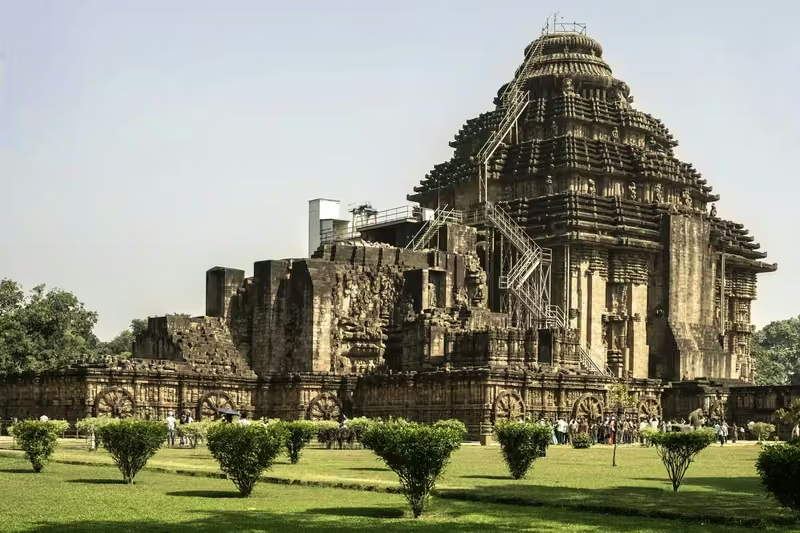
The Konark Sun Temple, also known as the Surya Devalaya, stands as one of India's most magnificent architectural achievements from the medieval period. Located on the eastern coastline of Odisha, approximately 35 kilometers northeast of Puri, this 13th-century temple dedicated to the Hindu Sun God Surya represents the zenith of Kalinga architectural tradition. Built around 1250 CE under the patronage of King Narasingha Deva I of the Eastern Ganga dynasty, the temple was conceived as a colossal stone chariot with 24 elaborately carved wheels, pulled by seven spirited horses.
What makes Konark extraordinary is not merely its scale but its artistic sophistication. The temple complex, though partially ruined, reveals an astonishing level of sculptural detail, with every surface covered in intricate carvings depicting celestial beings, musicians, dancers, animals, erotic scenes, and mythological narratives. Once towering over 200 feet high, the main sanctuary (shikara) has collapsed, but the surviving mandapa (audience hall) still rises approximately 100 feet, offering a glimpse into the temple's original grandeur.
Recognized as a UNESCO World Heritage Site in 1984, the Konark Sun Temple exemplifies the pinnacle of Orissan architecture and remains a testament to the engineering prowess, artistic vision, and religious devotion of medieval India. The temple's design as a chariot symbolizes Surya's celestial vehicle carrying the sun across the heavens, transforming religious architecture into cosmic poetry carved in stone.
History
The Eastern Ganga Dynasty and Narasingha Deva I
The Konark Sun Temple emerged during a golden age of the Eastern Ganga dynasty, which ruled large portions of present-day Odisha and parts of neighboring regions from the 5th to the 15th centuries. King Narasingha Deva I (reigned approximately 1238-1264 CE), one of the dynasty's most powerful rulers, commissioned this monumental temple around 1250 CE. The timing of construction was significant—it followed his military victories and marked an era of prosperity and artistic patronage.
The decision to build a Sun temple at Konark was both religious and political. Solar worship had deep roots in Vedic tradition, and by the medieval period, Surya was venerated across India. For Narasingha Deva I, the temple served as a statement of royal power, divine favor, and architectural ambition that would surpass all previous monuments in the region.
Construction
The construction of the Konark Sun Temple was an enormous undertaking that reportedly took approximately 12 years and involved thousands of skilled artisans, sculptors, and laborers. The temple was built using khondalite stone, a type of metamorphic rock found in the region, transported to the coastal site through elaborate logistical operations.
Historical accounts and local legends suggest the construction faced numerous technical challenges, particularly in establishing a stable foundation on sandy coastal soil and in raising the massive shikara tower. According to tradition, the temple's original design included a powerful lodestone (magnetic stone) at the apex of the main tower, which allegedly created magnetic effects and navigation challenges for ships passing along the coast—giving the temple its alternative name, the "Black Pagoda" among European sailors.
The temple complex was designed on an east-west axis, with the main sanctuary facing east to catch the first rays of the rising sun. This orientation was crucial to the temple's function as a solar shrine, where the dawn light would illuminate the principal deity in the inner sanctum.
Through the Ages
The temple's glory was relatively short-lived compared to its construction effort. By the early 16th century, less than 300 years after completion, the main sanctuary tower had collapsed. The exact cause remains debated among historians and archaeologists—theories include structural instability, incomplete construction, earthquake damage, or deliberate destruction during invasions.
The temple appears to have ceased functioning as an active place of worship by the early 17th century. The main deity was reportedly removed and taken to Puri for safekeeping. Coastal erosion, salt-laden winds, and weathering gradually deteriorated the remaining structures, though the sculptures remained remarkably well-preserved.
During the British colonial period, the temple gained renewed attention from European scholars and artists. Early documentation, including an 1815 sketch, captured the temple's sculptural wealth and architectural fragments. In 1901, facing concerns about complete collapse, British administrators ordered the remaining openings of the mandapa sealed and the interior filled with sand and rubble to stabilize the structure—a controversial conservation decision that preserved the building but rendered its interior spaces inaccessible.
Post-independence, the Archaeological Survey of India (ASI) took over protection and conservation of the site. Major restoration efforts in the 1950s, 1980s, and 2013 have focused on stabilizing structures, preventing further weathering, and maintaining the sculptures. In 1984, UNESCO recognized the temple's outstanding universal value by inscribing it as a World Heritage Site.
Architecture
Kalinga Architectural Tradition
The Konark Sun Temple represents the culmination of the Kalinga or Orissan architectural style that flourished in medieval Odisha. This tradition, which also produced the Lingaraja Temple in Bhubaneswar and the Jagannath Temple in Puri, is characterized by curvilinear towers (rekha deul), pyramidal roofs over assembly halls (pidha deul), elaborate sculptural programs, and horizontal emphasis in design elements.
The Chariot Design
The temple's most striking feature is its conception as the chariot of Surya, the Sun God. The entire structure was designed to represent this divine vehicle, with the surviving platform and mandapa forming the chariot body. Twenty-four massive stone wheels, each approximately 12 feet in diameter, are carved along the base—twelve on each side—representing the 24 hours of the day. Seven stone horses, now mostly damaged or removed, were originally positioned at the front, representing the seven days of the week or the seven horses that pull Surya's chariot in Hindu mythology.
Each wheel is a masterpiece of stone carving, featuring intricate spoke designs, floral motifs, and detailed hubs. Remarkably, these wheels function as sundials—the spokes cast shadows that can be used to calculate time with considerable accuracy, demonstrating the sophisticated astronomical knowledge of the temple's designers.
Structural Elements
The temple complex originally consisted of several main components:
Vimana (Main Sanctuary): The towering shikara that housed the principal deity stood at the western end, reportedly reaching heights over 200 feet. This structure has completely collapsed, leaving only the platform foundation visible.
Jagamohana (Audience Hall): This is the primary surviving structure, standing approximately 100 feet high. Built in the pidha deul style with a pyramidal roof of horizontal tiers, it features three distinct sections rising in height from east to west. The walls are adorned with three tiers of intricate sculptures depicting celestial musicians, dancers, deities, animals, and erotic scenes.
Natya Mandira (Dance Hall): A separate pillared hall located to the northeast of the main complex, this pavilion features exquisite sculptures of dancers and musicians, reflecting the importance of dance in temple worship traditions.
Bhoga Mandapa (Offering Hall): Another smaller structure in the complex, largely ruined, where food offerings were prepared for the deity.
Key Features
The temple's architectural brilliance lies in its details:
Sculptural Programs: Every available surface—walls, roofs, pillars, doorframes, and platforms—is covered with sculptures. These include multiple representations of Surya in his various forms, celestial apsaras (nymphs), gandharvas (celestial musicians), intricate floral and geometric patterns, animals both real and mythological, and scenes from daily life.
Erotic Sculptures: Among the most famous and controversial elements are the explicit erotic sculptures depicting mithuna (amorous couples) and various sexual positions. These carvings, found primarily on the outer walls, represent kama (desire/love) as one of the four purusharthas (aims of life) in Hindu philosophy and are artistic expressions of tantric traditions that were prevalent in medieval Odisha.
Guardian Figures: Massive stone elephants crushing enemies beneath their feet guard the base of the temple platform. Lions, makaras (mythical crocodile-like creatures), and other protective beings adorn various portions of the complex.
Miniature Temples: The walls feature niches containing miniature temple structures, creating a visual rhythm and demonstrating the builders' attention to scale and proportion.
Decorative Elements
The stone carving at Konark represents the absolute peak of medieval Indian sculptural artistry. The craftsmanship displays remarkable techniques:
- High relief sculpture creating almost three-dimensional figures
- Intricate pierced work in latticed windows and decorative panels
- Micro-detailing in jewelry, facial expressions, and costume elements
- Narrative sequences telling stories through multiple panels
- Naturalistic representation of human anatomy, animal forms, and plant life
The sculptures were originally painted, and traces of pigments have been found in protected areas, suggesting the temple once displayed vibrant colors that have long since weathered away.
Cultural Significance
Religious Importance
The Konark Sun Temple held immense religious significance as a center for Surya worship. In Hindu tradition, Surya represents consciousness, vitality, and the cosmic principle of light overcoming darkness. The temple's east-facing orientation ensured that the rising sun's first rays would illuminate the sanctuary, creating a powerful spiritual experience for devotees.
The temple also incorporated elements of tantrism, a spiritual tradition prominent in medieval Odisha that viewed the material and spiritual as interconnected. The erotic sculptures are not merely decorative but represent tantric concepts where sexual energy is seen as a path to spiritual enlightenment.
Astronomical and Scientific Legacy
Beyond its religious function, Konark demonstrates sophisticated astronomical knowledge. The temple's design incorporates solar geometry, with the wheel-sundials enabling time calculation. The entire complex can be read as a three-dimensional astronomical instrument, reflecting the advanced understanding of celestial mechanics possessed by medieval Indian astronomers and architects.
Artistic Influence
The Konark Sun Temple influenced subsequent temple architecture in Odisha and beyond. Its sculptural style, particularly the treatment of human figures and decorative elements, became a reference point for later artists. The temple has inspired countless artists, architects, and scholars, and its motifs have been reproduced in various forms of Indian art.
Symbol of Odisha
Konark has become an iconic symbol of Odishan cultural identity. The temple's wheel appears on Odisha's official emblem and on Indian currency. The annual Konark Dance Festival, held against the backdrop of the temple, celebrates classical Indian dance traditions and draws performers and audiences from around the world.
UNESCO World Heritage Status
In 1984, during the 8th session of the UNESCO World Heritage Committee, the Konark Sun Temple was inscribed on the World Heritage List under criteria (i), (iii), and (vi). The inscription recognized the temple as:
Criterion (i): A masterpiece of human creative genius, representing the pinnacle of Kalinga architecture with its exceptional artistic achievement.
Criterion (iii): A unique testimony to a cultural tradition, bearing exceptional witness to the religious, artistic, and architectural traditions of 13th-century Odisha.
Criterion (vi): Directly associated with living traditions and artistic expressions of outstanding universal significance, particularly in its representation of solar worship and tantric symbolism.
The UNESCO listing has provided international recognition and support for conservation efforts, while also increasing global awareness and tourism.
Conservation
Current Condition
The temple's conservation status is classified as "fair" by heritage authorities. While the surviving structures remain stable due to the 1901 sand-filling intervention and subsequent ASI conservation work, the monument faces ongoing challenges:
The primary surviving structure, the jagamohana, is stable but requires constant monitoring. The stone surfaces show weathering from salt-laden coastal winds, air pollution, and biological growth. Some sculptures have suffered damage from vandalism, weathering, and the sheer passage of time.
Major Threats
Coastal Erosion: The temple's proximity to the Bay of Bengal exposes it to salt spray and erosion. Rising sea levels due to climate change pose long-term risks.
Weathering: The porous khondalite stone is susceptible to deterioration from moisture, salt, and temperature fluctuations.
Structural Instability: Concerns persist about the long-term stability of the jagamohana, particularly given the collapse of the main sanctuary centuries ago.
Tourism Pressure: Heavy visitor footfall can contribute to wear on pathways and structures, though this is carefully managed.
Biological Growth: Lichens, algae, and other organisms colonize the stone surfaces, potentially causing chemical and physical damage.
Conservation Efforts
The Archaeological Survey of India has implemented comprehensive conservation measures:
- Structural stabilization using modern techniques while respecting the monument's historical integrity
- Chemical treatment of stone surfaces to prevent weathering and biological growth
- Drainage improvements to prevent water accumulation and reduce moisture-related damage
- Vegetation management to control plant growth that might damage structures
- Visitor management systems to limit impact while maintaining public access
- Documentation and monitoring using photography, 3D scanning, and regular condition assessments
Recent conservation projects (2013 onwards) have focused on consolidating loose stones, treating weathered surfaces, and improving site infrastructure to support better protection of the monument.
Visitor Information
Planning Your Visit
The Konark Sun Temple is open to visitors throughout the year from 6:00 AM to 8:00 PM. The best time to visit is during the winter months (October through February) when weather conditions are pleasant. Early morning visits are particularly rewarding, as the rising sun illuminates the temple's eastern façade, creating spectacular photographic opportunities.
Entry Fees and Timings
- Indian Nationals: ₹40
- Foreign Tourists: ₹600
- Students (Indian): ₹10
- Last Entry: 7:30 PM
The temple complex can be thoroughly explored in 2-3 hours. Photography is permitted, though videography may require additional permissions.
What to Expect
Visitors enter through a well-maintained pathway leading to the main temple complex. The site includes:
- The main jagamohana (audience hall) exterior, which can be viewed and photographed from all angles
- The natya mandira (dance pavilion) with its exquisite sculptures
- The massive stone wheels and horse sculptures
- Scattered architectural fragments and subsidiary structures
- A small archaeological museum displaying artifacts and providing historical context
The interior of the main temple structure is not accessible due to the sand-filling conservation measure implemented in 1901.
Facilities
The temple complex offers:
- Parking facilities for cars and buses
- Restrooms near the entrance
- Guided tours available through ASI-approved guides
- Audio guides available in multiple languages
- Drinking water facilities
- Small souvenir shops near the entrance
How to Reach
By Air: The nearest airport is Biju Patnaik International Airport in Bhubaneswar, approximately 65 kilometers away. Taxis and buses connect the airport to Konark.
By Rail: The nearest railway station is Puri (35 km away), well-connected to major Indian cities. From Puri, buses, taxis, and auto-rickshaws are readily available.
By Road: Konark is well-connected by road to Bhubaneswar (65 km) and Puri (35 km). State transport buses run regularly, and private taxis can be hired. The drive along the coastal route is scenic.
Nearby Attractions
Puri (35 km): Home to the famous Jagannath Temple, one of the four dhams (sacred pilgrimage sites) in Hinduism, and beautiful beaches.
Chandrabhaga Beach (3 km): A pristine beach near Konark, associated with the annual Chandrabhaga Mela festival held in February.
Ramachandi Temple (8 km): A coastal temple dedicated to Goddess Ramachandi.
Bhubaneswar (65 km): The capital city of Odisha, known as the "Temple City," featuring numerous ancient temples including Lingaraja Temple, Mukteshwar Temple, and Rajarani Temple.
Chilika Lake (80 km): Asia's largest brackish water lagoon, a paradise for bird watchers and nature enthusiasts.
Tips for Visitors
- Wear comfortable footwear: The complex involves considerable walking on uneven surfaces
- Carry sun protection: Hat, sunglasses, and sunscreen are essential, especially in summer
- Bring water: Stay hydrated, particularly during hot weather
- Hire a guide: The temple's iconography and symbolism are complex; a knowledgeable guide enriches the experience significantly
- Respect the monument: Do not touch or climb on sculptures
- Best photography time: Early morning (6:00-8:00 AM) or late afternoon (4:00-6:00 PM) for optimal lighting
- Modest clothing: While there's no strict dress code, respectful attire is appreciated at this religious site
- Festival timing: Visit during the Konark Dance Festival (December) for cultural performances, though expect larger crowds
Accessibility
The temple site has relatively flat terrain with paved pathways, making it accessible for wheelchair users, though some areas with steps may present challenges. Facilities for differently-abled visitors are available, including accessible restrooms.
Timeline
Legacy and Continuing Significance
The Konark Sun Temple stands as a testament to the artistic genius, architectural ambition, and spiritual vision of medieval India. Despite its partial ruination, the temple continues to inspire awe and wonder in visitors from around the world. Its sculptures represent some of the finest examples of stone carving in human history, while its architectural conception—a temple designed as the Sun God's chariot—remains unparalleled in its boldness and creativity.
For scholars, Konark offers endless subjects of study: its architectural techniques, sculptural iconography, astronomical alignments, religious symbolism, and historical context. For artists, it serves as an inexhaustible source of inspiration. For the people of Odisha, it remains a powerful symbol of cultural identity and historical achievement.
The temple's message transcends time: it speaks of human aspiration reaching toward the divine, of artistic skill transforming stone into poetry, and of the enduring power of cultural heritage to connect past and present. As conservation efforts continue and new technologies enable better understanding and protection of the monument, the Konark Sun Temple will continue to enlighten and inspire future generations, just as the sun continues its eternal journey across the sky.
See Also
Last updated: December 10, 2025
Sources: Wikipedia Contributors. (2024). Konark Sun Temple. Wikipedia. https://en.wikipedia.org/wiki/Konark_Sun_Temple
Note: This article is based on available historical sources. Some details about the temple's early history and construction remain subject to ongoing archaeological and historical research.


