Lion Capital of Ashoka: The Ancient Sculpture That Became a Nation's Symbol
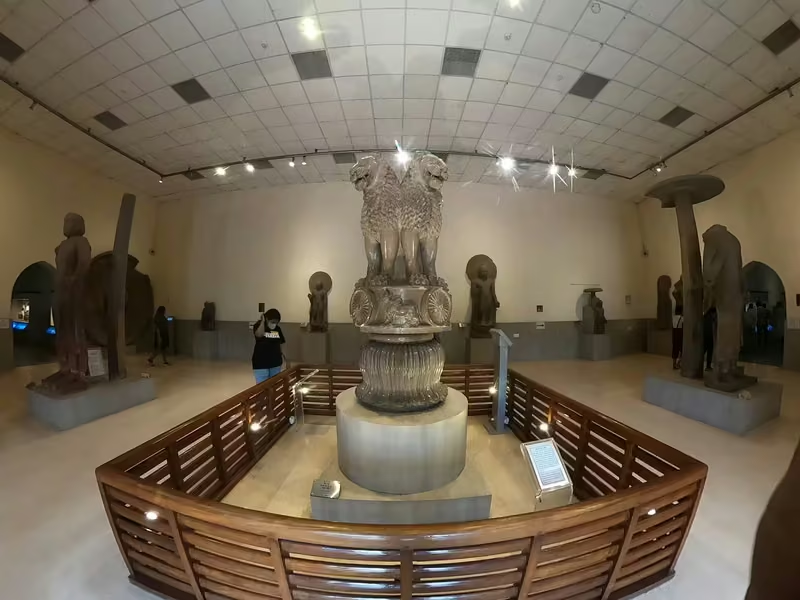
Standing majestically in the Sarnath Museum in Uttar Pradesh, the Lion Capital of Ashoka represents one of the finest examples of Mauryan art and one of India's most recognizable symbols. Carved around 250 BCE during the reign of Emperor Ashoka, this polished sandstone masterpiece originally crowned a pillar at the site where Buddha delivered his first sermon after attaining enlightenment. The capital features four Asiatic lions standing back-to-back, roaring in four directions, mounted on a circular abacus decorated with sculptures of animals in high relief. When India gained independence in 1947, this ancient symbol of Buddhist dharma and imperial power was adopted as the national emblem, ensuring that Ashoka's vision of righteousness and non-violence would continue to inspire the modern nation. Today, these lions appear on every piece of Indian currency and official government document, making this 2,300-year-old sculpture one of the most widely reproduced artworks in the world.
Discovery and Provenance
Discovery
The Lion Capital was discovered during archaeological excavations at Sarnath in the early 20th century. Sarnath, located near Varanasi, had long been known as a significant Buddhist site, but systematic excavations revealed the full magnificence of Ashoka's architectural program. The capital was found in pieces near the remains of the pillar it once crowned, having fallen or been deliberately dismantled centuries earlier during periods of religious upheaval and architectural decay.
Journey Through History
For approximately 2,300 years, the Lion Capital has witnessed the rise and fall of empires and the transformation of religious landscapes in India. Originally erected around 250 BCE by Emperor Ashoka as part of his dharma vijaya (conquest by righteousness) following his conversion to Buddhism after the devastating Kalinga War, the capital stood atop a massive pillar marking the sacred site of Buddha's first teaching.
During the Mauryan period, the capital served as a powerful symbol of imperial authority combined with Buddhist principles. The pillar and capital would have dominated the landscape at Sarnath, visible from great distances as a proclamation of Ashoka's commitment to dharma.
After the decline of the Mauryan Empire around 185 BCE, the monument continued to stand, though its maintenance varied with changing dynasties and religious patronage. Buddhist pilgrims visiting Sarnath would have revered the capital as part of their sacred journey. However, at some point—possibly during invasions or periods of religious conflict—the pillar was damaged and the capital fell, breaking into several pieces.
Current Home
Following its discovery in the early 1900s, the Lion Capital was carefully restored and placed in the Sarnath Museum, which was established specifically to house the remarkable Buddhist artifacts excavated from the site. The museum, located within walking distance of the Dhamek Stupa and other major Buddhist monuments at Sarnath, provides a climate-controlled environment protecting this national treasure.
The capital remains in Sarnath rather than being moved to a major metropolitan museum, honoring its connection to the sacred site and allowing visitors to experience it in its original geographical and spiritual context. This decision reflects both archaeological best practices and respect for the monument's religious significance to Buddhist pilgrims who continue to visit Sarnath from around the world.
Physical Description
Materials and Construction
The Lion Capital is carved from a single block of highly polished Chunar sandstone, a fine-grained buff-colored sandstone quarried from Chunar near Varanasi. The choice of this particular sandstone was deliberate—it could be worked to achieve an extremely smooth surface and then polished to a lustrous sheen that resembled the surface of polished metal or marble. This highly polished surface was a hallmark of Mauryan sculpture and demonstrated the sophisticated stone-working techniques available to Ashoka's craftsmen.
The level of craftsmanship displayed in the capital is extraordinary. The sculptors achieved remarkable precision in creating the four lions with identical proportions and expressions, each muscular body rendered with anatomical accuracy. The polish applied to the surface required specialized knowledge of abrasive techniques and finishing processes that have impressed art historians and conservators for over a century.
Dimensions and Form
The Lion Capital stands 2.15 meters (approximately 7 feet) tall and consists of several distinct elements arranged vertically. At the base is a bell-shaped lotus, representing the Buddhist symbol of purity and enlightenment. Above this sits the main abacus—a circular platform decorated with high-relief sculptures arranged around its circumference.
The abacus features four animals separated by four dharma chakras (wheels of law): a lion, an elephant, a bull, and a horse. These animals move in clockwise procession around the abacus, each carved with remarkable detail and naturalism. Between each animal is a chakra with 24 spokes, rendered in high relief against the background.
Above the abacus, four lions stand back-to-back, their bodies forming a square as they face the four cardinal directions. Each lion is shown in a standing position with its mouth open in a roar, its front right paw slightly raised. The lions share a common body mass at their haunches while their upper bodies and heads are fully independent, creating a sculptural tour-de-force that required exceptional planning and execution.
Originally, the lions supported an inverted lotus crown upon which rested a large dharma chakra—the "Wheel of Law." This wheel, which survives separately and is also displayed in Sarnath Museum, features 32 spokes and measures approximately one meter in diameter.
Condition
Despite being over 2,300 years old and having fallen from its pillar, the Lion Capital is in remarkably good condition. The main sculptural elements—the four lions and the abacus—remain largely intact with most details clearly visible. The highly polished surface still retains much of its original luster in protected areas, though exposed surfaces show some weathering.
Some minor damage is visible, particularly at the edges and extremities where the sandstone has chipped or worn. The original dharma chakra that crowned the lions was found separately and shows some surface wear but remains structurally sound. Conservation efforts have stabilized the pieces and protected them from further deterioration.
Artistic Details
The artistic achievement of the Lion Capital represents the peak of Mauryan sculpture. The lions demonstrate a sophisticated understanding of feline anatomy, with clearly articulated musculature, pronounced shoulder blades, and naturalistic facial features. The expressions of the lions—mouths open in powerful roars—convey both strength and authority while maintaining a sense of controlled energy appropriate to their symbolic function.
The animals on the abacus show equal attention to naturalistic detail. The elephant is shown with carefully observed features including its trunk, tusks, and characteristic body proportions. The bull (zebu) includes the distinctive shoulder hump of Indian cattle breeds. The horse displays the refined features typical of noble steeds, while the lion on the abacus mirrors the majesty of the lions above.
The dharma chakras between the animals feature 24 spokes arranged with mathematical precision, each spoke perfectly aligned and proportioned. The wheels serve both decorative and symbolic functions, representing Buddha's teaching and the path to enlightenment.
An intriguing feature that has sparked scholarly debate is the existence of geometric precision in the sculpture's layout. The positioning of the animals, the spacing of the chakras, and the proportions of the lions all suggest the use of sophisticated geometric planning and possibly standardized measurements.
Historical Context
The Era
The Lion Capital was created during one of the most transformative periods in Indian history. Emperor Ashoka ruled the Mauryan Empire from approximately 268 to 232 BCE, governing a territory that stretched from present-day Afghanistan to Bangladesh and from the Himalayas to Karnataka. This was the largest empire the Indian subcontinent had yet seen, unified under a single administrative system based at the capital of Pataliputra.
The Mauryan period witnessed significant developments in art, architecture, administration, and religious thought. Following the brutal Kalinga War around 261 BCE, which resulted in enormous casualties and suffering, Ashoka underwent a profound personal transformation. He converted to Buddhism and dedicated the remainder of his reign to promoting dharma (righteous living), non-violence, and religious tolerance throughout his empire.
This religious and philosophical transformation manifested in an unprecedented program of monument construction. Ashoka erected pillars, stupas, and rock edicts throughout his empire, using these monuments to communicate Buddhist principles and administrative policies to his diverse subjects. The pillars, in particular, represented a new form of royal proclamation—permanent stone monuments bearing inscriptions in local languages and scripts.
Purpose and Function
The Lion Capital served multiple interconnected purposes, each layer of meaning reinforcing Ashoka's vision for his empire. At its most fundamental level, the capital marked the location where Buddha delivered his first sermon (the Dhammacakkappavattana Sutta or "Setting in Motion the Wheel of Dharma") to his first five disciples in the deer park at Sarnath around 528 BCE. By erecting this magnificent monument at this specific location, Ashoka honored Buddhism's foundational moment and proclaimed his allegiance to Buddhist principles.
The four lions facing the cardinal directions symbolized the spread of dharma to all corners of the world, an apt metaphor for Ashoka's own missionary activities. Historical records indicate that Ashoka sent Buddhist missions to neighboring kingdoms and distant lands, including Sri Lanka, Central Asia, and possibly even the Mediterranean world. The lions' roars represented the thunderous proclamation of dharma that would awaken all beings.
The animals on the abacus—lion, elephant, bull, and horse—carry multiple layers of symbolism. In Buddhist iconography, these animals are associated with different aspects of Buddha's life and teachings. The elephant represents Buddha's conception and birth (his mother Maya dreamed of a white elephant before his birth). The bull symbolizes strength and Buddha's power to destroy ignorance. The horse recalls Buddha's departure from his palace on his horse Kanthaka, beginning his spiritual quest. The lion represents Buddha himself, often called "the Lion of the Shakya clan."
These same animals also had secular significance in Mauryan imperial symbolism, representing the power, dignity, and majesty of the emperor. The lions specifically were royal symbols, associated with kingship and authority throughout ancient India and neighboring regions.
The dharma chakras between the animals directly referenced Buddha's first sermon, known as "Turning the Wheel of Dharma." The 24 spokes of these wheels have been interpreted as representing various aspects of Buddhist teaching, though the exact meaning remains debated among scholars.
Commissioning and Creation
Emperor Ashoka commissioned the Lion Capital as part of his extensive program of monument construction following his conversion to Buddhism. While we have no written records detailing the specific circumstances of its creation, the capital's exceptional quality suggests that Ashoka employed the finest craftsmen available to his empire.
The creation of such a monument would have required extensive planning and coordination. The sandstone had to be quarried at Chunar, transported to Sarnath, and then carved by highly skilled sculptors. The technical challenges were considerable—carving four identical lions from a single stone block, achieving the highly polished surface, and engineering the capital to be stable when mounted atop a pillar some 15-20 meters high all demanded expertise and experience.
The style of the Lion Capital and other Mauryan pillars has prompted art historians to consider possible foreign influences, particularly from Achaemenid Persian art, which featured similar polished stone columns and animal capitals. However, the Lion Capital's Buddhist symbolism and its integration of Indian artistic traditions—particularly in the naturalistic rendering of the animals—demonstrates a synthesis rather than mere imitation of foreign models.
Significance and Symbolism
Historical Importance
The Lion Capital stands as one of the most important surviving artifacts from the Mauryan Empire and provides invaluable evidence for understanding this crucial period in Indian history. As a product of Ashoka's reign, it offers insights into the emperor's religious beliefs, his understanding of royal authority, and his vision for communicating with his subjects.
The capital also represents a pivotal moment in the development of Indian art. The Mauryan period marks the beginning of monumental stone sculpture in India, with the quality of workmanship exemplified by the Lion Capital setting standards that would influence Indian art for centuries. The capital demonstrates that by the 3rd century BCE, Indian sculptors had mastered sophisticated techniques of stone carving and surface finishing.
From a religious history perspective, the Lion Capital provides material evidence for the spread and royal patronage of Buddhism in ancient India. Ashoka's conversion to Buddhism and his subsequent promotion of Buddhist principles had profound effects on the religion's development, transforming it from a regional faith to a major world religion. The Lion Capital stands as a permanent monument to this transformation.
Artistic Significance
The Lion Capital represents the pinnacle of Mauryan sculptural achievement and set standards for artistic excellence that reverberated through subsequent centuries of Indian art. Its combination of technical mastery, symbolic sophistication, and aesthetic refinement makes it a masterwork of ancient sculpture.
The naturalistic rendering of the animals—particularly the lions—demonstrates an observational approach to sculpture that was revolutionary for its time in India. Earlier Indian sculpture had been primarily terra cotta or wooden architectural elements, and monumental stone sculpture was a new medium. The sculptors of the Lion Capital showed that this new medium could achieve unprecedented levels of refinement and expressive power.
The capital's design principles—the hierarchical arrangement of symbolic elements, the use of circular organization, and the integration of multiple levels of meaning—influenced later Indian architectural sculpture. Elements visible in the Lion Capital appear in various forms in Gupta period sculpture, medieval temple architecture, and even Mughal decorative programs.
The highly polished surface technique pioneered on the Mauryan pillars and capitals influenced stone finishing traditions throughout India. Later dynasties would attempt to recreate this lustrous surface, though few achieved the same quality as the Mauryan craftsmen.
Religious and Cultural Meaning
Within Buddhist tradition, the Lion Capital carries profound religious significance. The lions represent Buddha's fearless proclamation of truth—just as a lion's roar frightens other animals, Buddha's teaching dispels ignorance and false views. The four lions facing the cardinal directions symbolize the universal applicability of dharma, offering liberation to all beings regardless of direction, status, or background.
The dharma chakras reference Buddha's first sermon at Sarnath, making the capital a permanent commemoration of this foundational event in Buddhist history. For Buddhist pilgrims visiting Sarnath, the capital serves as a tangible connection to the Buddha's presence and teaching at this sacred site.
Beyond its Buddhist symbolism, the Lion Capital has become a symbol of Indian identity and values. When India's constituent assembly was selecting a national emblem in 1950, they chose the Lion Capital because it represented ancient India's cultural achievements, its spiritual traditions, and its message of non-violence and dharma—principles central to the independence movement led by Mahatma Gandhi.
The motto inscribed below the emblem—"Satyameva Jayate" (Truth Alone Triumphs)—comes from the Mundaka Upanishad and reinforces the connection between ancient Indian wisdom and modern Indian democracy. The adoption of the Lion Capital as the national emblem thus bridges ancient and modern India, connecting contemporary Indian identity to its long cultural and spiritual heritage.
Scholarly Study
Key Research
The Lion Capital has been the subject of extensive scholarly study since its discovery. Early 20th-century art historians, including Sir John Marshall who directed excavations at Sarnath, recognized the capital's exceptional significance and quality. Marshall's publications established the capital as a key example of Mauryan art and identified its connection to Ashoka's pillar inscriptions.
Later scholars have examined the capital from various perspectives. Art historians have analyzed its style, comparing it to other Mauryan sculptures and exploring possible connections to Persian Achaemenid art. The highly polished surface technique has been studied by conservation scientists seeking to understand the methods used to achieve such remarkable finishes.
Archaeological studies at Sarnath have contextualized the capital within the broader Buddhist complex, revealing how it functioned as part of a carefully planned sacred landscape. Excavations have uncovered the pillar base and foundations, allowing researchers to reconstruct the capital's original appearance and height.
Iconographic studies have examined the symbolism of the lions and the animals on the abacus, tracing their meanings through Buddhist texts and comparing them to other ancient Indian symbolic systems. These studies have revealed the sophisticated program of meaning embedded in the sculpture.
Technical studies have examined how the capital was engineered to sit atop a pillar while supporting the weight of the large dharma chakra above. The precision of the carving and the structural considerations required demonstrate sophisticated understanding of both sculptural art and engineering principles.
Debates and Controversies
Several scholarly debates surround the Lion Capital. One ongoing discussion concerns the extent of Persian influence on Mauryan art. Some scholars argue that the polished pillars and animal capitals directly imitate Achaemenid Persian models, while others emphasize the distinctively Indian elements and suggest a more complex cultural exchange rather than simple borrowing.
Another debate concerns the number of spokes in the dharma chakra that originally crowned the lions. While the wheel in Sarnath Museum has 32 spokes, India's national emblem depicts a 24-spoke wheel based on representations in Sanchi and other locations. Some scholars argue that different wheels may have had different numbers of spokes representing different aspects of Buddhist teaching, while others suggest the discrepancy results from later modifications or artistic license.
The symbolism of the four animals on the abacus has generated various interpretations. While there is general agreement that they relate to Buddha's life and teaching, scholars debate the specific meanings and whether these meanings would have been apparent to ancient viewers or remained esoteric knowledge for Buddhist initiates.
Questions about the workshop organization and the identity of the sculptors remain unresolved. Did Ashoka maintain a centralized workshop that created standardized pillar capitals, or were local craftsmen employed at each site? The remarkable consistency in style across Mauryan pillars suggests some form of central control, but the mechanisms remain unclear.
Legacy and Influence
Impact on Art History
The Lion Capital's influence on Indian art history cannot be overstated. It established standards of quality and sophistication that subsequent generations of Indian sculptors would aspire to match. The naturalistic rendering of animals, the integration of symbolic elements, and the technical mastery of stone carving visible in the capital became reference points for evaluating later sculpture.
During the Gupta period (4th-6th centuries CE), often called the Golden Age of Indian art, sculptors drew inspiration from Mauryan models including the Lion Capital. The Gupta lion capitals at sites like Mathura show clear debts to the Ashokan prototype while developing their own stylistic characteristics.
Medieval Indian temples incorporated many design elements first seen in the Lion Capital: the use of animal sculptures as architectural supports, the integration of dharma chakras in decorative programs, and the hierarchical arrangement of symbolic elements. Temple architecture across India, from the Dravidian temples of the south to the Nagara temples of the north, shows the lasting impact of Mauryan design principles.
The capital has also influenced modern and contemporary Indian art. Artists responding to questions of Indian identity and cultural heritage frequently reference the Lion Capital as a symbol of India's artistic traditions and spiritual values.
Modern Recognition
The Lion Capital achieved its highest recognition in 1950 when it was adopted as the National Emblem of India. This decision, made by India's constituent assembly shortly after independence, elevated the ancient sculpture to a position of unprecedented prominence. Today, the emblem derived from the capital appears on:
- All Indian currency notes and coins
- Government letterheads and official documents
- Indian passports
- National awards and decorations
- Government buildings and monuments
- Official seals and stamps
The adoption as the national emblem has made the Lion Capital one of the most widely recognized and reproduced artworks in the world. An estimated billions of impressions of the emblem are produced annually on various official materials, ensuring that Ashoka's symbol remains visible to over a billion people daily.
The capital has been designated as a national treasure under India's Antiquities and Art Treasures Act, ensuring its protection and preventing its removal from India. It is among the artifacts specifically listed as objects of national importance that cannot be exported under any circumstances.
The Lion Capital has inspired numerous replicas and artistic representations. A prominent replica stands at the Rashtrapati Bhavan (Presidential Palace) in New Delhi, serving as a focal point for official ceremonies. Replicas have also been gifted to foreign nations and international organizations as symbols of Indian culture and values.
In popular culture, the Lion Capital appears frequently in Indian media, films, and literature as a symbol of Indian heritage. Its image graces book covers, documentary films about Indian history, and educational materials used throughout the country.
Viewing Today
The Lion Capital remains on permanent display at the Sarnath Museum, located approximately 13 kilometers from Varanasi in Uttar Pradesh. The museum, managed by the Archaeological Survey of India, is open to visitors throughout the year (except on Fridays) from 10:00 AM to 5:00 PM.
The capital is displayed in the central gallery of the museum, positioned to allow viewers to observe it from all sides. The museum has installed appropriate lighting and environmental controls to protect the sandstone while allowing visitors to appreciate the sculpture's details and the remarkable polish on its surface. Informational panels in multiple languages provide context about the capital's history, symbolism, and significance.
The dharma chakra that originally crowned the lions is displayed separately nearby, allowing visitors to understand how the complete monument would have appeared. Photographic reconstructions and diagrams help visitors visualize the capital atop its pillar.
The Sarnath Museum also houses numerous other important Buddhist sculptures and artifacts from the site, providing comprehensive context for understanding the Lion Capital's role in the sacred landscape of Sarnath. Visitors can see fragments of other Ashokan pillars, Buddha sculptures from various periods, and architectural elements from the monasteries that once flourished at the site.
Outside the museum, visitors can explore the Sarnath archaeological complex, which includes the Dhamek Stupa, monastery ruins, and the original location where the Ashoka pillar stood. The site remains an active pilgrimage destination for Buddhists from around the world, particularly during important Buddhist festivals.
For those unable to visit Sarnath, high-quality images of the capital are available through the Archaeological Survey of India's digital resources, and replicas can be seen at various museums and monuments throughout India. The most prominent replica, at Rashtrapati Bhavan in New Delhi, is visible during official state functions and can be viewed by the public during designated visiting hours.
Conclusion
The Lion Capital of Ashoka stands as a remarkable convergence of artistic achievement, religious devotion, and political vision. Created over 2,300 years ago to mark the spot where Buddha first shared his teachings, it has transcended its original purpose to become a symbol of India itself. The capital's four roaring lions continue to proclaim dharma—not just Buddhist dharma, but the broader principles of truth, courage, and righteous conduct that resonate across religious and cultural boundaries.
The capital's journey from Mauryan pillar top to national emblem reflects India's own journey—from ancient empire to medieval kingdoms to modern democratic republic. Through all these transformations, the Lion Capital has endured, its message of non-violence and truth remaining relevant across the centuries. Every time an Indian citizen uses currency, receives a government document, or sees the national emblem, they encounter this ancient sculpture, creating a living connection between contemporary India and its rich historical heritage.
As both masterwork of ancient sculpture and active symbol of modern India, the Lion Capital of Ashoka reminds us that great art transcends time, speaking to each generation in languages they understand while carrying forward the visions and values of those who created it. In its perfectly proportioned lions and their eternal roar, we hear not just Ashoka's proclamation of dharma in the 3rd century BCE, but an ongoing invitation to courage, truth, and righteousness that remains as vital today as it was when the capital first crowned its pillar at Sarnath over two millennia ago.